Kellogg seeks to unseat Lukens in House District 26

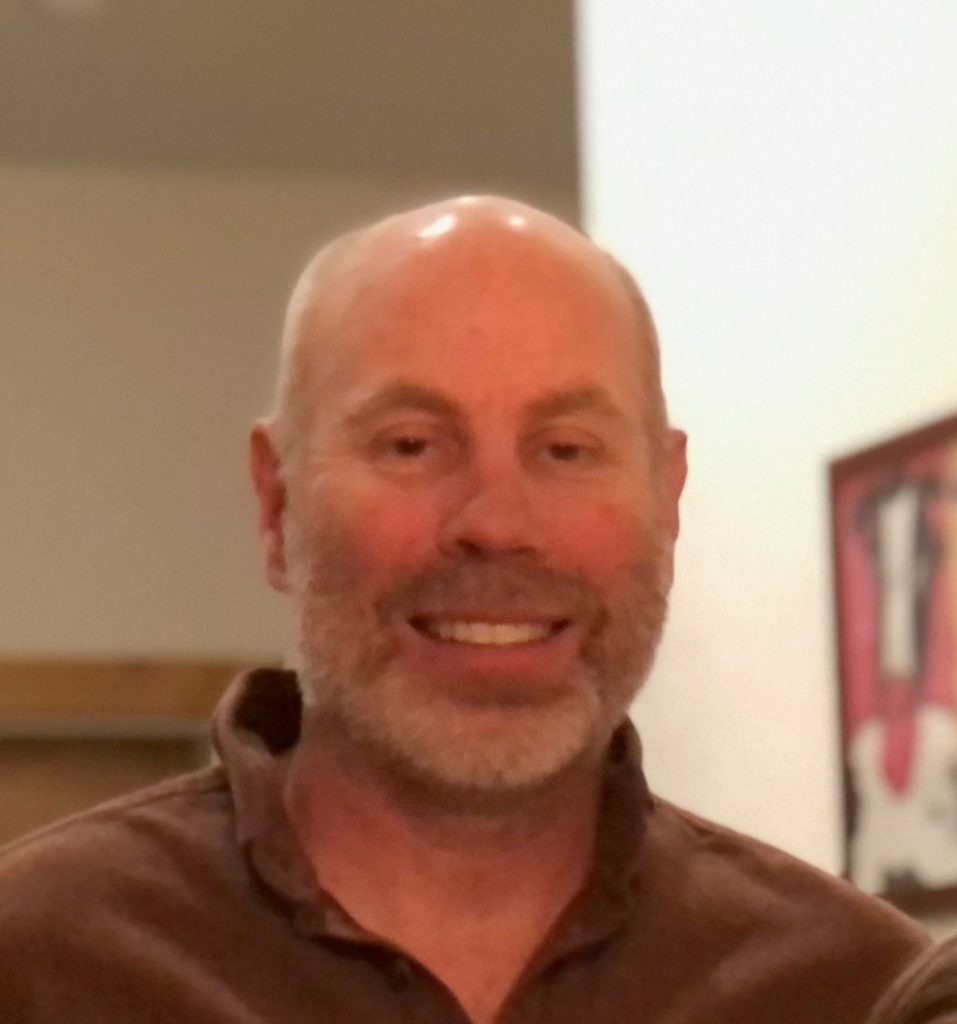
James Kellogg/Courtesy photo
James Kellogg, an engineer from Gypsum who has long roots on the western slope, is seeking to knock off incumbent Meghan Lukens of Steamboat Springs in the upcoming House District 26 election.
Kellogg, a Republican, advanced to the general election after winning an uncontested primary in June.
A graduate of Virginia Tech, Kellogg earned a B.S and and M.S. in civil engineering before embarking on a thirty year career on the western slope. Specializing in geotechnical, geologic and water resource engineering, Kellogg has worked for both public and private sector entities during his career and considers himself well-versed on water rights and the energy needs of western Colorado.
Yet with under two months until the election, Kellogg comes into the race at a distinct financial disadvantage compared to his challenger. As of Sept. 21, Kellogg had $2,190.34 of cash on hand compared to Luken’s $77,362.96. Kellogg acknowledged the fundraising gap and said that he was focusing his campaign on a more grassroots approach by “knocking on doors” and attending various debate opportunities prior to the election.
The funds that have been raised by Kellogg have all come from individual donors and as of the Sept. 21 filing report, no contributions had been received from political action committees. During the same reporting period, Lukens received over $25,000 from various PAC’s including $6000 from the Colorado AFL-CIO Small Donor Committee and $6200 for the Realtor Small Donor Committee.
When questioned about his limited fundraising efforts, Kellogg said, “I do not have any relationships with any kind of PAC’s….I’m just a regular engineering consultant that’s trying to run for office and doing the best I can to get the message out.”
Despite the large differential in financial contributions, Kellogg emphasized his extensive private sector management experience over Luken’s public sector career as a distinct advantage in facing the economic challenges of House District 26.
Regarding the issues facing House District 26, Kellogg cited the high costs of living, energy policy and water rights as his primary motivations for running for office and his commitment toward protecting local resources and communities.
Energy policy
Describing himself as a pragmatist regarding energy policy, Kellogg believes in an “all of the above” strategy to provide electrical resources and protect local economies. His arguments against closing down hydrocarbon production lies in his belief that renewable energy cannot match the energy density or reliability of current fossil fuel technologies.
While not considering himself a “climate change denier,” Kellogg acknowledged the potential impacts of emissions but emphasized looking at the economic ability of the region to invest in cleaner technology. Rather, Kellogg suggests that technological improvements such as “bag houses” at coal plants can mitigate negative environmental impacts while maintaining jobs in the region.
Summarizing his energy policy views, Kellogg said that electrical generation should be examined through a cost-benefit lens rather than purely political motivations and that government regulation makes private energy operations economically unfeasible.
Data centers
While the issue of data center construction has been a topic of policy debate in House District 26, Kellogg generally supports their expansion provided they “pay their own way by utilizing their own power sources insead of relying solely on the local grid.”
“I think data centers are critical and I know it’s a political issue….the reality is everybody benefits right now from all the information we have at our fingertips and AI and the things that can do…it’s a powerful tool. But when it comes to the electricity aspect of what data centers need, they need to come in with ways that they’re going to pay their own way, so to speak.”
Regarding concerns about excessive water usage by data centers, Kellogg said, ” I think that the water uses with data centers are a little bit overblown. There are ways to make closed systems with data centers like geothermal. There is initial water intake but then you can keep recirculating and reusing and recycling — it’s not like a constant draw.”
Affordability and the urban/rural divide
Kellogg identified affordable living as a common pain point shared by residents of both resort areas of Vail/Steamboat and the rural regions of Moffat, Routt Rio Blando and Eagle counties. “People look at affordable living as the biggest obstacle to what they face. Whether you live in a community like Steamboat or Vail or on a ranch, you see the cost of living continue to increase. At the end of the day, people aren’t that far apart. Whether its diesel fuel or the cost of housing or the the cost of groceries — that effects everyone.”
2nd Amendment issues
Kellogg said that he identifies a a pro-Second Amendment candidate but emphasized the importance of firearm safety training and responsible gun ownership.
“I own firearms and I enjoy shooting. I take the right seriously and I think that anybody who has a firearm — it’s their obligation to store it properly and learn to use them and if they need training , go get it. But I think it’s an important right but a slippery slope. When you start to limit one aspect of the U.S. Constitution and the Bill of Rights, then it becomes all that easier to chip away at something else. I wish everybody would understand that the Constitution is not about limiting our rights. It guarantees. It asserts what we’ve been given,” said Kellogg.
Campaign
Kellogg noted the difficulty of working a demanding job that takes up over 60 hours a week and running a campaign at the same time. However, he says that he is committed to winning the race by his personal outreach and attendance at various events including the Club 20 debate held in Grand Junction on Sept. 19 where Lukens delined to appear citing prior family commitments.









Support Local Journalism
Support Local Journalism
Readers around Craig and Moffat County make the Craig Press’ work possible. Your financial contribution supports our efforts to deliver quality, locally relevant journalism.
Now more than ever, your support is critical to help us keep our community informed about the evolving coronavirus pandemic and the impact it is having locally. Every contribution, however large or small, will make a difference.
Each donation will be used exclusively for the development and creation of increased news coverage.