Western Slope schools were a bright spot for Colorado’s reduction of chronic absenteeism in 2025
Colorado schools are back on track to halve chronic absenteeism by 2028 — but it will require some heavy lifting

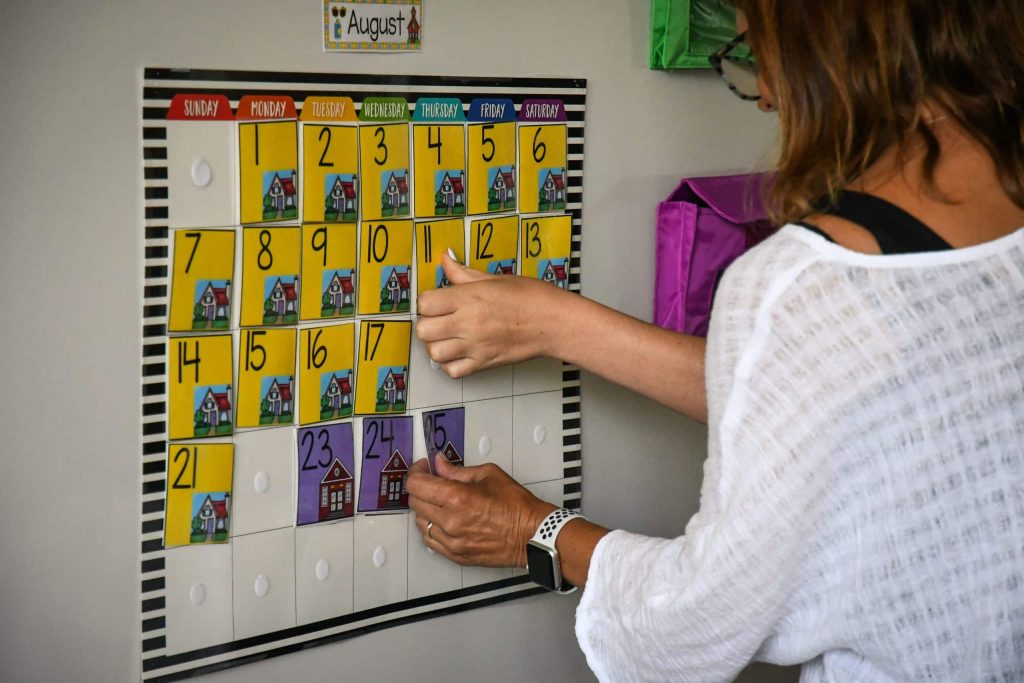
Chelsea Self/Post Independent archives
Colorado school districts made notable strides in decreasing the state’s chronic absenteeism rate and improving attendance during the 2025-26 school year, with several Western Slope districts outperforming the statewide average.
Nearly every student group saw improvements in attendance and chronic absenteeism rates across all grade levels — a notable contrast to the year prior, when an increase of 3,500 chronically absent students caused attendance to drop for the first time since the pandemic.
Despite the incremental wins, Colorado Education Commissioner Susana Córdova said exponential improvements are needed to catch up with the department’s goal of reducing chronic absenteeism by 50%.
“We’ve made progress, but … we still have significant work ahead of us,” Córdova said during a Thursday media briefing. “To do this, we need to accelerate the progress that we’re seeing.”
Statewide attendance rates saw slight improvement during the 2025-26 school year, climbing by 0.1 percentage points to 91.5%, according to a Thursday news release.
Meanwhile, chronic absenteeism fell by 0.9 percentage points to 27.5% — or 233,281 chronically absent students — marking the state’s lowest rate in four years. The drop translates to 11,341 fewer students who missed 10% or more of the days enrolled during the school year compared to 2024-25, the marker for chronic absenteeism.
Colorado’s chronic absenteeism rate has been on the decline since reaching a high of 34.5% in 2021-22. In 2024, the Colorado Department of Education launched an attendance campaign with the goal of reducing chronic absenteeism to 17.8% by the 2026-27 school year — a decrease of 50% from the state’s pandemic high. The goal has since been adjusted to reducing chronic absenteeism to 15% by the 2027-28 school year.
To date, more than 110 schools across 83 districts have joined the attendance campaign and receive support, resources and tools focused on attendance, according to the release.
“We know that regular attendance is essential for student learning and success,” Córdova said. “Missing just two days of school a month can add up to 16 or 18 days over the course of a school year, which is nearly a full month of learning. And those missed days matter at every age.”
Progress across student groups
The decline in chronic absenteeism was reflected across every grade level and nearly every student group, including declines among six of the seven racial and ethnic groups and four of the five instructional program and service groups reported.
Roughly 61% of Colorado school districts maintained or reduced rates of chronic absenteeism, according to data published Aug. 27. Of those districts, 18 have cut chronic absenteeism by half since the 2021-22 school year — when absenteeism was at an all-time high — and 43 of 185 districts now have lower chronic absenteeism rates than before the pandemic.
While the progress is encouraging, Córdova said schools “cannot lose sight” of the fact that more than 27% of Colorado students remain chronically absent.
“Attendance is more than just sitting in a seat,” Córdova said. “When students are in school, they have opportunities to learn. They build relationships with their teachers and their classmates, and feel connected to their school community.”
Older students continue to have some of the highest chronic absenteeism rates in the state. In 2025-26, 41% of 12th-graders, 34.5% of 11th-graders and 31.8% of 10th-graders were chronically absent, according to the release.
While chronic absenteeism declined across all but one ethnic group reported by the state, significant disparities remain. Hispanic students recorded an absenteeism rate of 37%, roughly 10 percentage points higher than the state average and more than 16 percentage points higher than their white peers. Hawaiian/Pacific Islander and American Indian/Alaskan Native students recorded rates of 52% and 42%, respectively.
Historically underserved student groups saw similar disparities. Students experiencing homelessness — the only group to see rising absenteeism rates in 2025-26 — saw rates that were 30 percentage points above the state average, or 57%. Students from migrant families and multilingual learners saw small improvements, but still recorded chronic absenteeism rates that were 10 percentage points above average.
Western Slope districts outperform state averages
Western Slope school districts were a bright spot for Colorado, with several reporting higher attendance and lower chronic absenteeism than the state average.
Among the districts with the lowest chronic absenteeism rates were the South Routt School District and Garfield School District Re-2, achieving improved rates of 13.6% and 17.8%, respectively. Though few Western Slope districts saw a rise in chronic absenteeism and falling attendance since the 2024-25 school year, the majority still performed better than the state average.
Garfield Re-2 was awarded individual recognition for its efforts to improve student attendance, having brought up its attendance rate from 91% to almost 94% over four years and reducing its chronic absenteeism rate by 55.6% over the same period — making it one of the 18 districts in Colorado to successfully halve its chronic absenteeism rate before the 2028 goal.
Garfield Re-2 Superintendent Kirk Banghart said the district of roughly 5,000 students addressed its chronic absenteeism rate by helping families overcome barriers that keep students from school — barriers that once contributed to a chronic absenteeism rate of 40.1% in 2021-22. This included implementing an online learning pathway in 2024 to provide a way for middle and high school students to receive instruction and complete their schoolwork regardless of external life circumstances.
“We know that there are many reasons why kids miss school,” Córdova said. “Sometimes it may be transportation, sometimes there may be health concerns, but it may also be that a student doesn’t feel connected to their school or supported at school. That’s why this work really does start with ensuring that we have engaged learning occurring every day, understanding why a student is missing school and organizing our supports to help meet their needs and remove their barriers.”
Córdova said the Department of Education plans to continue using data to identify practices that improve attendance, which is a central part of the state’s strategic plan for the 2026-27 school year.
“We’re encouraged by the progress that we’re seeing, but we know that we can do more and need to do more,” she said.






Support Local Journalism
Support Local Journalism
Readers around Craig and Moffat County make the Craig Press’ work possible. Your financial contribution supports our efforts to deliver quality, locally relevant journalism.
Now more than ever, your support is critical to help us keep our community informed about the evolving coronavirus pandemic and the impact it is having locally. Every contribution, however large or small, will make a difference.
Each donation will be used exclusively for the development and creation of increased news coverage.