As drought conditions worsen, Craig to weigh codified water restrictions during April 28 city council meeting

John Camponeschi/Craig Daily Press
As drought conditions intensify across Northwest Colorado, the city of Craig is moving to protect the city’s supply water and the infrastructure that treats it.
Public Works Director Danny Paul and Water and Wastewater Director Carl Ray said in an interview with the Craig Press that the city currently has no codified water conservation policy in its municipal code, despite past councils approving temporary watering restrictions by resolution during dry years in the late 1980s, late 1990s and early 2000s.
Because those measures were never written into city code, Craig lacks a clear enforcement mechanism at a time when water conditions are rapidly becoming more severe.
Both Paul and Ray described the present year as one of the worst Craig has seen in decades.
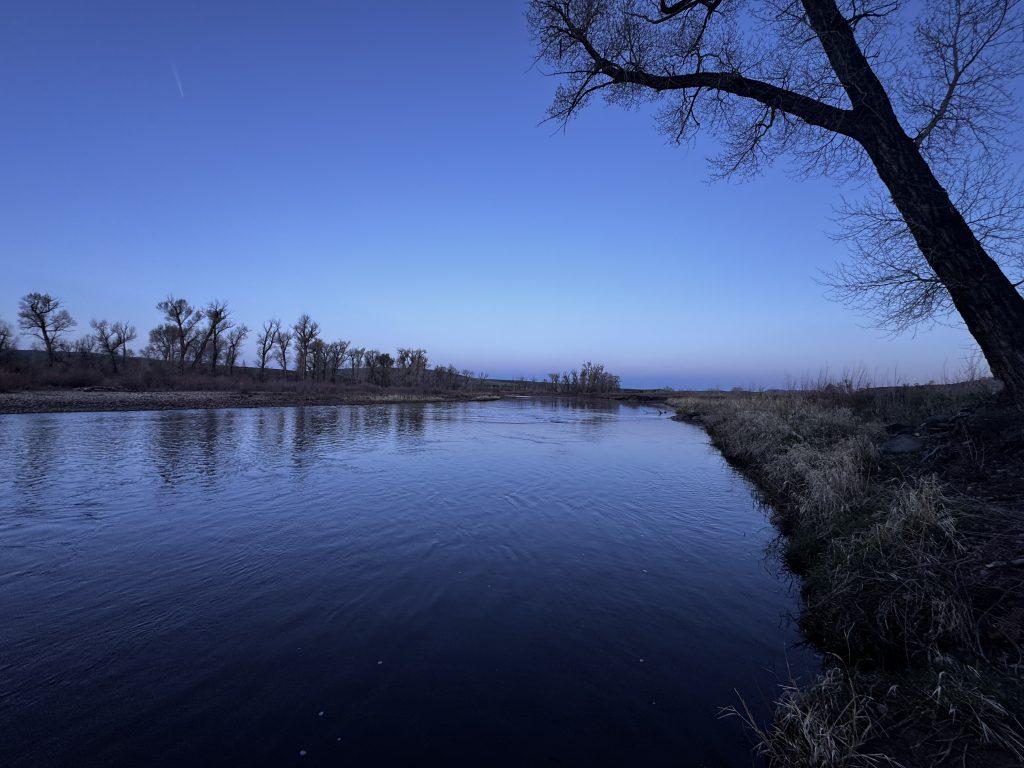
Paul said the region is facing exceptionally low snowpack and rapidly declining flows in the Yampa River, the primary source for Craig’s municipal water system.
“We’re expecting this water year to be the worst one we’ve seen in maybe 50 years or more,” Paul said.
The proposal comes as officials monitor conditions that are part of a broader crisis across Colorado and the American West. Due to shrinking reservoir levels throughout the region, Paul said Craig can no longer rely on the voluntary conservation of water by residents during dry conditions.
Without a codified ordinance, Ray said that the city is left “just hoping that people will do the right thing and conserve,” but without a way to require it or enforce compliance.
The basis of the ordinance is both practical and environmental. Water restrictions would reduce the amount of water the city must treat and distribute when the river is running low and the treatment plant faces operational constraints.
Ray said the city reviewed past low-water years, including 2002, 2012, 2018 and 2020, to determine when restrictions should begin. The city also used historical flow data from the U.S. Geological Survey gauge below Craig to assess how low river conditions affect the water treatment plant’s ability to operate.
According to Ray, the city’s treatment plant requires a certain cubic feet per second (cfs) of water supply when it is running at a standard rate. In 2018, when the Yampa’s flows dropped significantly, the city experienced sand, silt and debris entering the system.
He also explained that Craig’s treatment plant does not operate around the clock. Instead, it operates about 14 hours a day due to staffing limits and because operating it continually at reduced rates would not be efficient from an energy-cost standpoint.
Based on that analysis, city officials identified 120 cfs in the Yampa River, measured as a daily mean at the USGS gauge below Craig, as the point at which restrictions should take effect.
The city would lift restrictions after flows rise above 200 cfs for seven consecutive days.
Ray said the city is projecting there could be as many as 110 days over a roughly six-month span when the river falls below the 120 cfs threshold.
If restrictions are triggered, the city’s plan would focus first on outdoor watering.
Residents with even-numbered addresses would be allowed to water on Sundays, Tuesdays and Fridays. Residents with odd-numbered addresses would be allowed to water on Mondays, Thursdays and Saturdays.
No watering will be allowed on Wednesdays.
Outdoor watering also would be prohibited between 10 a.m. and 6 p.m., a period city officials said coincides with peak demand and the least efficient times to apply water.
Both Paul and Ray explained that the schedule is not designed to kill lawns and landscapes, but to limit excess water use among residents. Paul said research from other communities shows grass can remain healthy under a three-day schedule if watering happens during the proper hours.
“It’s overkill if someone’s watering their yard seven days a week all the time,” Paul said. “And not only that, but they’re costing themselves a lot of money to pay for that water.”
The ordinance would apply to outdoor water use including lawns, landscaping and gardens.
It also would bar residents from using devices with openings larger than three-eighths of an inch for outdoor watering, a restriction meant to prevent wasteful use. Some exceptions would remain, including certain drip irrigation uses and nonpotable supplies such as private wells.
The draft also includes more stringent emergency restrictions that could be imposed if conditions worsen beyond what officials now expect.
Those emergency measures could include limits on washing vehicles at home, hosing down driveways, operating decorative water features and using potable water for dust control on construction sites.
The ordinance also would affect the city itself.
Paul identified parks, sports fields and the cemetery as major water consumers, along with commercial users such as hotels, motels, laundromats and car washes. If the restrictions take effect, city-managed landscapes would also fall under the same watering framework.
One notable exception is the Yampa Valley Golf Course. Paul said the course is outside Craig city limits, so the ordinance would not apply there directly. While the city does allow the golf course to use some city-related irrigation water rights, the city does not have jurisdiction to enforce a municipal watering ordinance outside its boundaries.
Officials said enforcement inside city limits would begin with extensive outreach as opposed to punishment.
Paul said the city plans an extensive public communication effort through local media, social media, the newspaper and direct contact with major water users. If the threshold is met, the water department would monitor the USGS gauge and issue a public notification that restrictions are being put into place.
Enforcement would then fall to the city’s municipal code compliance coordinator within the Community Development Department, which is part of the Public Works Department. Under the draft, a first violation would result in a verbal or written warning. A second offense would carry a $50 fine. A third offense could bring a $100 fine.
Repeated refusal to comply could ultimately allow the city to shut off a customer’s water service.
Paul acknowledged the possibility of some public resistance.
“We do expect some pushback,” Paul said. “But we feel that something’s necessary to formalize this and to have the ability to enforce it if people are choosing not to follow.”
Officials also said the city considered a more aggressive tiered rate structure that would raise water bills for higher-volume users during restriction periods. The City Council, however, asked staff to remove that provision from the draft.
That decision leaves the ordinance focused on schedules, enforcement and public education rather than financial penalties built into utility bills.
The broader strategy, however, does not stop there.
Alongside the ordinance, the city is also exploring whether to lease upstream water from Elkhead Reservoir or Stagecoach Reservoir to help bolster supply.
Paul said the city may need to lease about 393 acre-feet of water to cover the approximately 110 days it expects could be critically dry, an option that could cost around $100,000. Officials say the combination of conservation measures and leased water could help ensure Craig has enough potable water to get through the summer.
Even with those efforts, city officials said the ordinance is meant to be simple, practical and in line with what other Colorado communities already do.
Paul said the draft was modeled after similar measures used elsewhere in the state, including nearby communities in the Yampa Valley. The goal, he said, was not to reinvent the wheel, but to create a clear policy tailored to Craig’s system and water realities.
The city’s draft ordinance, which will be available Friday on the City of Craig website, is scheduled to go before City Council for introduction and first reading April 28. A second reading and public hearing would follow May 12. If adopted, the ordinance would take effect 10 days later.
Regarding when residents might actually see restrictions begin, officials said that depends on the river, the potential for late season snowfall and the frequency and intensity of rainfall throughout the remainder of the year.
Paul estimated restrictions might not be needed until late July and could remain in place through September, the city’s typical low-water season. Ray suggested it could happen even sooner, depending on how quickly flows continue to drop.
In the meantime, officials are encouraging residents to think ahead. Water at night or early morning, let grass grow a little longer to retain moisture, mulch gardens and look for opportunities to reduce indoor use as well.








Support Local Journalism
Support Local Journalism
Readers around Craig and Moffat County make the Craig Press’ work possible. Your financial contribution supports our efforts to deliver quality, locally relevant journalism.
Now more than ever, your support is critical to help us keep our community informed about the evolving coronavirus pandemic and the impact it is having locally. Every contribution, however large or small, will make a difference.
Each donation will be used exclusively for the development and creation of increased news coverage.