City council reviews road and sidewalk conditions, eyes short-term rental regulations and potential water restrictions

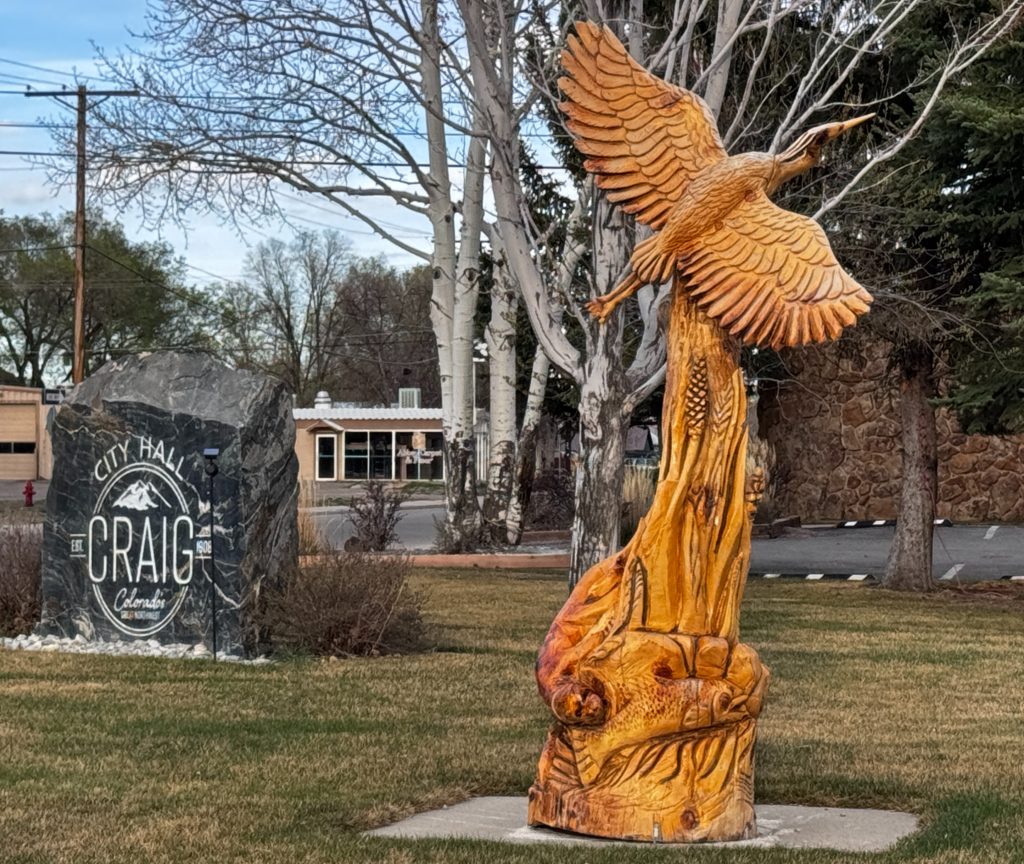
John Camponeschi/Craig Daily Press
Infrastructure planning, housing development and new regulations were topics of discussion during the April 14 Craig City Council meeting. The meeting also was the final meeting for City Manager Peter Brixius, who is retiring.
Brixius confirmed during his report that it would be his last meeting in the role, with a new city manager KC Hume expected to begin at the next council meeting.
A retirement party for Brixius will be held at the Museum of Northwest Colorado on April 23 from 4-6 p.m.
On the agenda was the presentation of the city’s Road Master Plan final report, which was shared and elaborated on by Public Works Director Danny Paul and Trevor Triffo, who is a consultant with MDS Technologies.
The report evaluated approximately 54 miles of paved city streets. The overall condition of Craig’s roads was found to be strong, with 42.7% of roads in good condition and 45.9% in satisfactory condition.
Very few roads fall into poorer categories and none rated in failing condition.
Credit should be given to the city’s long-running chip seal program for maintaining those conditions, Triffo said. The program, which involves applying preventative treatments designed to extend the life of pavement before major deterioration occurs, rotates through different areas of the city on a seven-year cycle.
The approach is significantly less costly than full reconstruction. To maintain current conditions, it was recommended that the city continue prioritizing early maintenance to avoid more expensive repairs in the future, in addition to increasing its road maintenance budget over time to keep pace with rising construction costs.
It also suggested reassessing road conditions every three years to monitor trends and adjust planning and budgetary allocations as needed.
While the streets of the city ranked well, sidewalks were identified as a weaker infrastructure area.
The assessment found many sidewalks are cracked, uneven or discontinuous, creating potential safety hazards. It was also noted that some sidewalks may not meet Americans with Disabilities Act standards due to width, slope or overall condition.
“One of the things we suggest to the City is that it consider creating a standard for future sidewalk construction,” Triffo said.
Council also approved the first reading of an ordinance establishing regulations for short-term rentals within city limits.
Paul noted the ordinance follows more than a year of discussion, public outreach, surveys and focus groups, which were used to gather input from property owners and residents.
The proposed ordinance requires all short-term rentals to register with the city for a one-time fee of $75, with no annual renewal fee. It would also allow short-term rentals in all zoning districts without a cap on the number of units.
Additional requirements include occupancy limits of two people per bedroom plus two additional occupants, minimum off-street parking standards in most areas and designation of a local responsible party to respond to issues or complaints related to STRs.
In other business, council approved agreements related to the Meadowood apartment project.
The project is supported by a DOLA More Housing Now grant of approximately $1.9 million. The state-level funds, administered through the Department of Local Affairs, will fund infrastructure improvements associated with the development, including roads, utilities and transit access features.
Alex Gano, an outside counsel from the New Communities Law Firm, who is assisting the city with the project, explained that developer Colorado Outdoors will construct the infrastructure and maintain it during a warranty period before it is transferred to the city for long-term ownership and maintenance.
A separate land use issue was also resolved during the meeting through approval of a replat and property transfer in the Glen Erie subdivision.
The action addressed a situation in which a garage built in 2008 was discovered to extend about five feet onto city-owned land. The city approved transferring about 2,153 square feet of property to the current owner for $100.
Building Official Marlin Eckhoff noted the encroachment was not caused by the current property owner.
During his report, Brixius provided updates on regional and city operations, including the dissolution of the local marketing district and economic development planning efforts.
Brixius shared his observations related to a regional solar energy tour. He noted that 13 solar installations across the Yampa Valley have generated approximately $1.34 million in savings since late 2021.
Brixius discussed potential water restrictions within the city limits as drought conditions are expected to worsen following a winter with snowfall that fell far below average. He said an ordinance addressing water use will be brought forward in the near future, with additional information to be shared through city communication channels.
The meeting also included an update on the city’s transition of code enforcement responsibilities from the police department to the community development department.
According to staff, the change is intended to allow more consistent attention to municipal code violations, including property maintenance and public health concerns. In the first two weeks of the transition, 58 cases were handled, with 15 resolved and others still in progress.
Mayor Chris Nichols took time at the end of the meeting to recognize the nearly eight-year service and leadership of Brixius to the city.
Speaking on behalf of himself and the community, Nichols said it had been a pleasure working with Brixius and described his professionalism and dedication to the city as exceptional, while also noting that his leadership moved forward a wide range of projects.
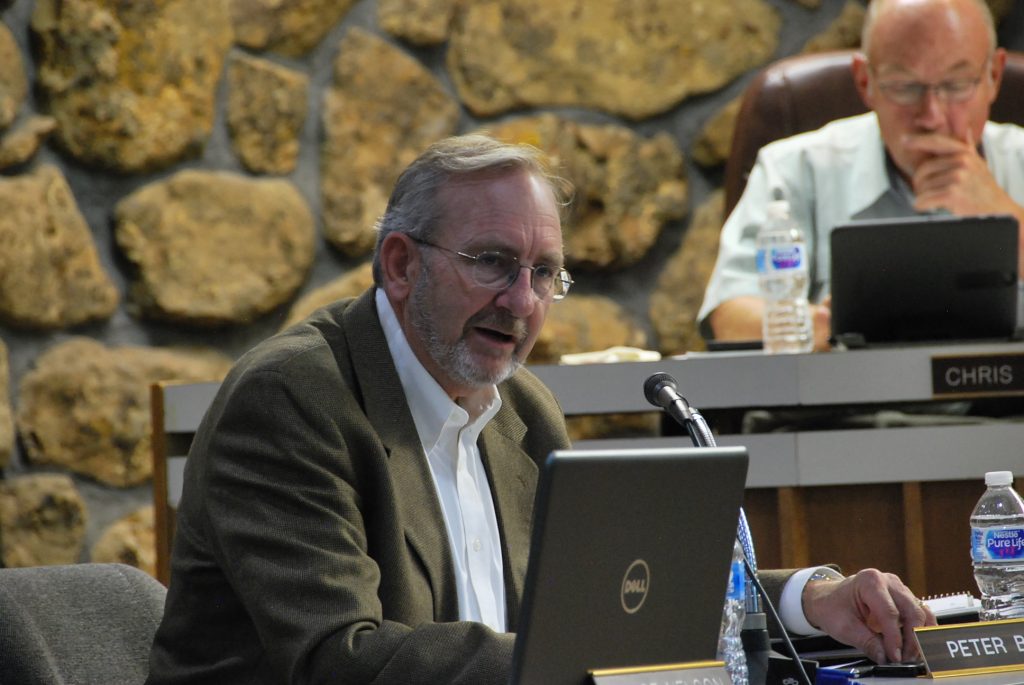
Nichols said Brixius played a key role in advancing and securing millions of dollars in grant funding for the city, estimated at nearly $25 million. He also credited Brixius with fostering staff development and hiring and promoting employees who continue to serve across city departments.
“You’re leaving the city better than when it was when you arrived,” Nichols said.
Nichols noted that Craig had a fund balance of about $5.5 million when Brixius began, with concerns about meeting payroll at the time. He said the city is now in a significantly stronger position, with roughly $26.6 million in carryover.
Nichols concluded by thanking Brixius for his contributions, saying he believed he was speaking on behalf of the full council in recognizing the impact of his service.


Support Local Journalism
Support Local Journalism
Readers around Craig and Moffat County make the Craig Press’ work possible. Your financial contribution supports our efforts to deliver quality, locally relevant journalism.
Now more than ever, your support is critical to help us keep our community informed about the evolving coronavirus pandemic and the impact it is having locally. Every contribution, however large or small, will make a difference.
Each donation will be used exclusively for the development and creation of increased news coverage.