Colorado AG vows to fight ‘unlawful’ Trump-backed mail voting changes following Supreme Court ruling
The ruling still allows for future legal challenges once the proposed changes to mail-in ballots go into effect

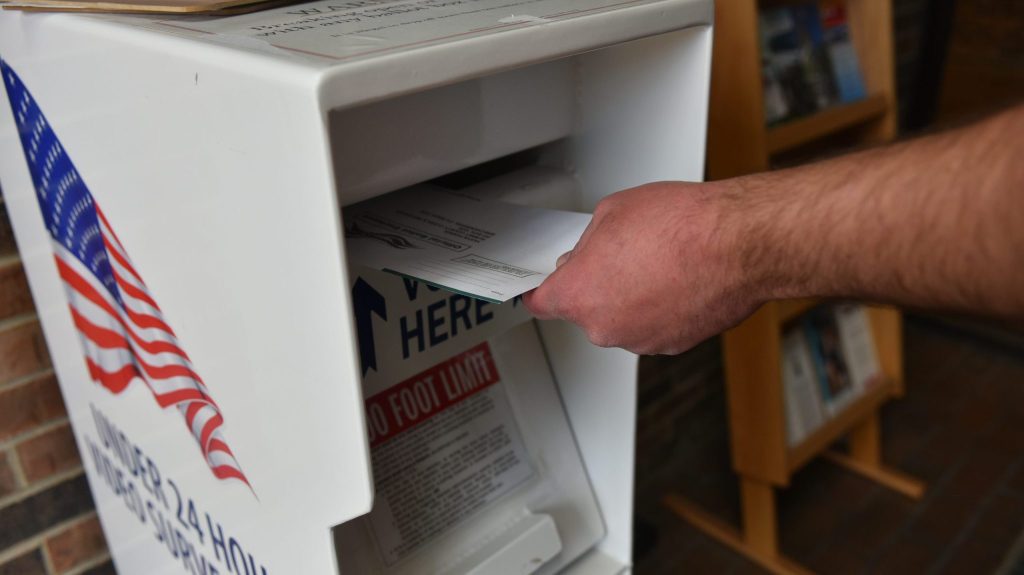
Jessica Sachs/Summit Daily News
Colorado Attorney General Phil Weiser, who sued earlier this year alongside nearly two dozen other states to prevent changes by the Trump administration to mail-in voting, said he would continue his legal fight after the US Supreme Court opened the door for the changes to go into effect.
The court’s conservative majority on Monday, Aug. 25, lifted a lower court’s block on an executive order from President Donald Trump seeking to restrict mail-in voting for the November midterm elections.
Trump signed the order on March 31, which directs the U.S. Department of Homeland Security to compile a list of U.S. citizens based on federal databases and requires the Postal Service to send mail ballots only to voters on that list.
Weiser, a Democrat who is running for Colorado governor in November, said in a statement on Monday that the Supreme Court is “giving too wide a berth to an administration that clearly intends to engage in electoral mischief and block citizens’ freedom to vote.”
In April, Weiser joined Democratic attorneys general from 22 other states and Washington, D.C., in a lawsuit against the Trump administration to stop the order. A federal judge on July 25 blocked the order from taking effect in those states after finding that its provisions “unconstitutionally violate the separation of powers,” which gives states and Congress the power to pass election laws, not the president.
Following an appeal by the Trump administration, the Supreme Court reversed the lower court’s ruling after finding that the states sued prematurely since the mail-in voting changes had not yet taken effect. The Supreme Court’s ruling does, however, allow for additional legal challenges once the order is implemented, with the conservative justices writing that “time will tell” whether the order is administered legally.
Weiser said the changes to mail-in voting could cause chaos and uncertainty in the upcoming election and signaled more legal challenges were coming.
“Colorado relies on mail ballots, and I will use every legal tool I have to prevent the federal government from implementing any unlawful actions arising from the president’s unconstitutional executive order,” Weiser said. “The Supreme Court may have dodged the merits of the federal government’s actions today, but those claims will have their day in court. We all must be vigilant and keep fighting for the freedom to vote.”
The ruling comes within weeks of ballots being sent to voters in several states. County clerks in Colorado have from Oct. 2-9 to mail ballots to registered voters, and it is unclear how quickly the Trump administration will be able to implement the proposed changes.
The executive order places new requirements on how mail-in ballots can be sent to “enhance election integrity.” That includes mandating that states use unique identifiers on ballot envelopes, such as barcodes, “reducing the risk of fraud and protecting the integrity of Federal elections,” the order states. It also directs the U.S. Attorney General to prioritize investigating and prosecuting state and local officials who send ballots to people who are deemed not eligible to vote in federal elections.
Voting rights groups, along with local and state election officials, warn that the new rules will be cumbersome to implement so soon before the midterm elections and could disenfranchise voters.
Trump, who has pushed election denialism, including false claims that he won the 2020 presidential election, has repeatedly made unsubstantiated statements that voting by mail has led to mass fraud.
During a news conference at the White House shortly before signing the March 31 executive order, Trump claimed that “cheating on mail-in voting is legendary.” Trump has voted by mail several times, most recently returning a ballot in Florida on Aug. 13 in the state’s Republican primary, according to Politico.
Colorado passed its mail-in voting law in 2013, sending mail ballots to every active registered voter in the state. Though voters still have the option to vote in person at polling centers, the vast majority of Coloradans choose to return their ballot by mail or at a drop-off box.
Mail-in voting in Colorado has also been linked to increased voter turnout and accessibility, particularly among low-propensity voters. A 2025 analysis by the Brookings Institution found that cases of fraud involving mail-in voting are very rare, with anywhere from six to 46 cases of mail-in voting fraud identified during the 2016, 2018, 2020 and 2022 general elections. That translates to about four instances of mail-in voting fraud for every 10 million mailed votes.

Colorado lawmakers make bipartisan call for Trump to grant federal aid for wildfires after previous denials
Colorado Gov. Jared Polis is requesting a major disaster declaration from President Donald Trump and the Federal Emergency Management Agency, just months after the administration denied similar requests for disaster recovery aid.






Support Local Journalism
Support Local Journalism
Readers around Craig and Moffat County make the Craig Press’ work possible. Your financial contribution supports our efforts to deliver quality, locally relevant journalism.
Now more than ever, your support is critical to help us keep our community informed about the evolving coronavirus pandemic and the impact it is having locally. Every contribution, however large or small, will make a difference.
Each donation will be used exclusively for the development and creation of increased news coverage.