Witches’ Broom: A spooky site in your trees

As the end of October approaches, you may be seeing plenty of witches, ghosts, pumpkins and broomsticks decorating front porches and lawns around town. But if you spot a broom-like cluster high in a tree, it may have nothing to do with Halloween decorations.
A witch’s broom is not just a witch’s main mode of transportation, and despite its spooky name, there is no magic involved. While its name may conjure images of flying witches, witches’ broom is actually a symptom of stress, disease, or pest activity within a tree or shrub.
Witches’ broom is the name given to an unusual growth pattern in trees and shrubs where a large number of small branches or twigs grow tightly together. The result of this is a dense, tangled clump that looks a whole lot like an old-fashioned broom stuck up in the tree. Witches’ broom can develop for several different reasons. Depending on the plant, it may be associated with fungi, phytoplasmas, mites or parasitic plants such as dwarf mistletoe.
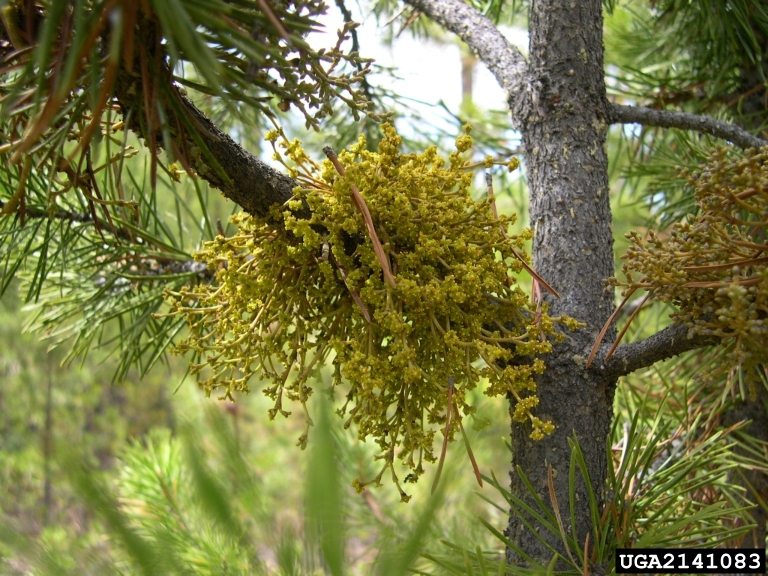
Here in Colorado, one cause you may encounter in our conifers is dwarf mistletoe. Dwarf mistletoes are parasitic plants that infect several of our native conifers, including lodgepole and ponderosa pine, as well as Douglas-fir, piñon and bristlecone pine, depending on the species of mistletoe involved. When dwarf mistletoe infects a tree, it alters normal growth patterns and stimulates the production of numerous shoots from a single location. The result is the dense, tangled cluster of branches characteristic of a witches’ broom. These growths indicate that the tree is under stress.
Instead of flying around on a broom, dwarf mistletoe has another impressive trick. It spreads its seeds from infected plants, allowing them to reach nearby branches and trees. Once established, the parasite draws water and nutrients from its host. Over time, infection can reduce tree growth, thinning foliage, increased susceptibility to insects and diseases, and decline in tree vigor. Severe and heavy, long-term infections can eventually kill trees.
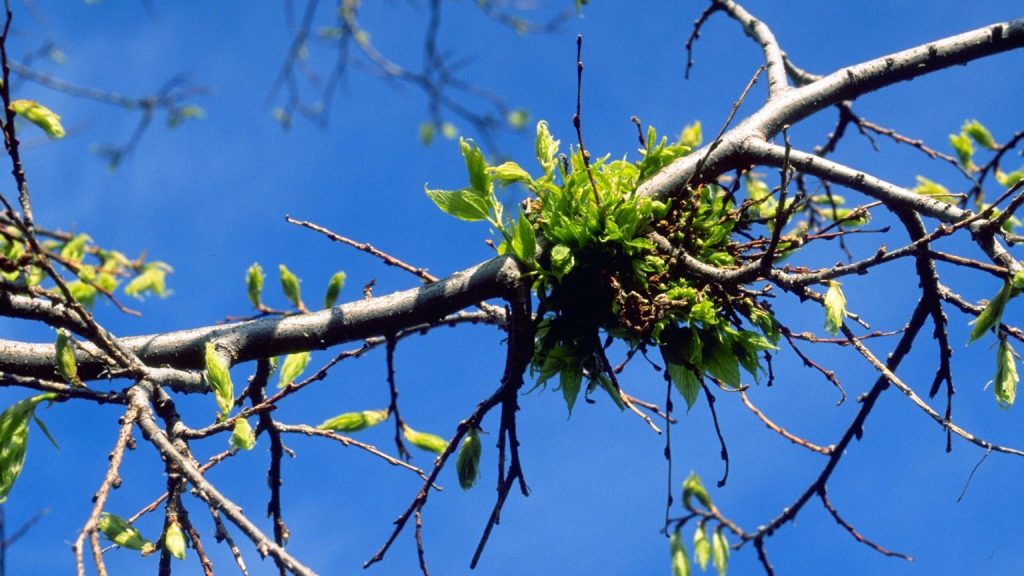
If you see a tangled clump of branches in your tree, remember that the growth itself is a symptom rather than a diagnosis. Don’t assume every witch’s broom is caused by dwarf mistletoe, so identifying the tree species and looking closely at the affected growth are important first steps.
Management options depend on the source of the witch’s broom and the severity of the problem. Pruning infected branches can sometimes be an option when only a small portion of the tree is infected. This can help reduce the spread and improve the appearance of the tree. More extensive infections may require tree removal, particularly when infected trees can serve as a source of infection for nearby susceptible trees.
On the positive side, in the natural setting, these dense, tangled clusters of branches can provide nesting and shelter opportunities for birds and other wildlife. In fact, some species have adapted to use them as important habitat features.
This Halloween season, take a moment to look up into the trees around your yard or neighborhood. If you spot what appears to be a broom parked in the branches, don’t assume a witch forgot where she left her ride. It may simply be nature’s version of a Halloween decoration, and possibly a sign that the tree is under stress and needs a closer look.
For more information on witches’ broom and other information about trees, shrubs or other horticulture mysteries around your yard, contact the Moffat County Extension Office.
Megan Stetson is the Moffat County Extension Director.







Support Local Journalism
Support Local Journalism
Readers around Craig and Moffat County make the Craig Press’ work possible. Your financial contribution supports our efforts to deliver quality, locally relevant journalism.
Now more than ever, your support is critical to help us keep our community informed about the evolving coronavirus pandemic and the impact it is having locally. Every contribution, however large or small, will make a difference.
Each donation will be used exclusively for the development and creation of increased news coverage.