Moffat County names data center interests, confirms meetings with officials
Communication between Moffat County Commissioner Villard, data center firms began in April

John Camponeschi/Craig Daily Press
Editor’s note: This is a developing story and more information will be posted as it becomes available.
Last update: 8:26 p.m. Aug. 7
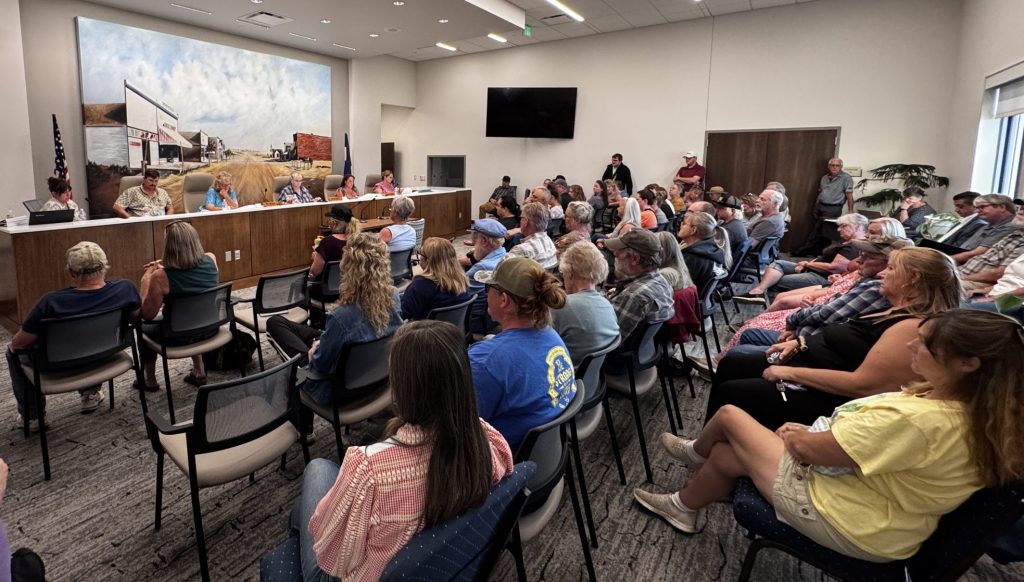
Moffat County has identified two companies that expressed interest in potential development in the Trapper area and confirmed that their representatives met with senior county officials, providing more detail about discussions that were not mentioned during a standing-room only Aug. 5 Planning and Zoning Commission meeting.
In an Aug. 7 press release sent to the Craig Press by Moffat County Commissioner Melody Villard, the county identified the companies as Pure-Green and Toto and said representatives requested meetings with county officials.
The companies met with Melody Villard, chair of the Moffat County Board of County Commissioners and Natural Resources Director Jeff Comstock, according to the county.
The release also states that separate conversations occurred with Planning and Zoning Director Candace Miller.
The disclosure adds a new layer to questions surrounding statements made at Wednesday’s Planning and Zoning Commission meeting, where residents repeatedly asked why the county was undertaking a data center-specific regulatory review and whether a particular project was driving the process.
Miller told the public there were no proposed projects, applications or speculative projects before the Planning Department. She said she initiated the review after observing data center development elsewhere in the country and described the effort as preparation in case the issue “were to come our way.”
The county now says expressions of interest had already come its way when Miller made her statements during the Aug. 5 meeting.
At the same time, Club 20 Executive Director Wade Haerle has withdrawn earlier statements suggesting that Moffat County was operating under nondisclosure agreements or had received letters or notices of intent from prospective data center developers.
Haerle told the Craig Daily Press on Friday that he mistakenly spoke regarding Moffat County while explaining practices he had encountered while researching data center development in other areas.
“That’s 100% on me,” Haerle said. “I know I used those words, but I did not mean that Moffat County had it.”
Haerle said he has never seen a letter of intent involving Moffat County and was never told by county officials that one existed. He also said county officials never told him which companies had expressed interest in the Trapper area.
“We’ve never talked about any company that has approached them,” Haerle said. “I have never talked with anybody associated with Moffat County about any company around data centers ever.”
Haerle’s correction resolves part of the conflict that emerged after his initial interview. The county’s latest release again states that no county official has entered into a nondisclosure agreement related to the discussions.
But the correction does not resolve broader questions about what county officials knew before the Aug. 5 meeting and how that information was presented to the public.
The county now says Pure-Green’s interest resulted from the Moffat County Economic Development Council’s Trapper Industrial Park marketing initiative, which was designed to attract companies, developers and investors interested in redevelopment following the announced closures of Trapper Mine and Craig Station.
Toto also expressed interest in evaluating opportunities in the Trapper area, according to the release.
The county characterized both contacts as preliminary and exploratory. Officials said no land-use application, zoning application, building permit application or formal development proposal has been submitted and no county approvals have been requested or granted.
While nothing disclosed by the county establishes that either company will pursue a project, the amount of information available about activity preceding the public zoning discussion on Aug. 5 has vastly increased.
The county’s first clarification acknowledged that two unnamed entities had contacted Moffat County. The latest release identifies them and confirms that representatives met with the commission chairman and Comstock while also holding separate conversations with Miller.
The county further revealed that letters concerning Pure-Green and Toto appeared in the Board of County Commissioners’ July 14 consent agenda materials.
According to the release, those publicly available documents reflected the county’s willingness to allow both companies to continue exploring concepts for the area.
Both letters, which bear Villard’s name and signature, do not mention data centers specifically.
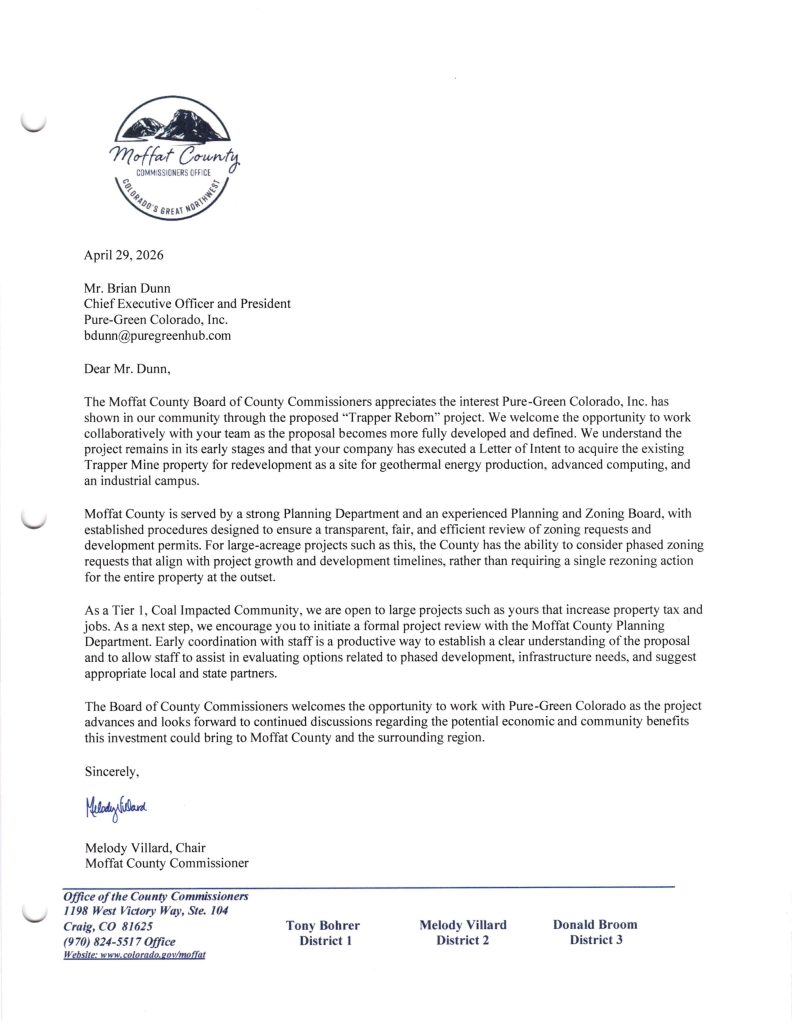
Instead, the letter to Pure-Green Colorado, Inc. Chief Executive Officer and President Brian Dunn, dated April 29, 2026, states that “the project remains in its early stages and that your company has executed a Letter of Intent to acquire the existing Trapper Mine property for redevelopment as a site for geothermal energy production, advanced computing, and an industrial campus.”
The letter also identifies the county’s willingness to examine its zoning as it relates to Pure-Green’s request.
“Moffat County is served by a strong Planning Department and an experienced Planning and Zoning Board, with established procedures designed to ensure a transparent, fair, and efficient review of zoning requests and development permits,” says Villard in her letter. “For large-acreage projects such as this, the County has the ability to consider phased zoning requests that align with project growth and development timelines, rather than requiring a single rezoning action for the entire property at the outset.”
The letter continues to say “As a Tier l, Coal Impacted Community, we are open to large projects such as yours that increase property tax and jobs. As a next step, we encourage you to initiate a formal project review with the Moffat County Planning Department.”
The letter to Toto is vague and bears few specifics.
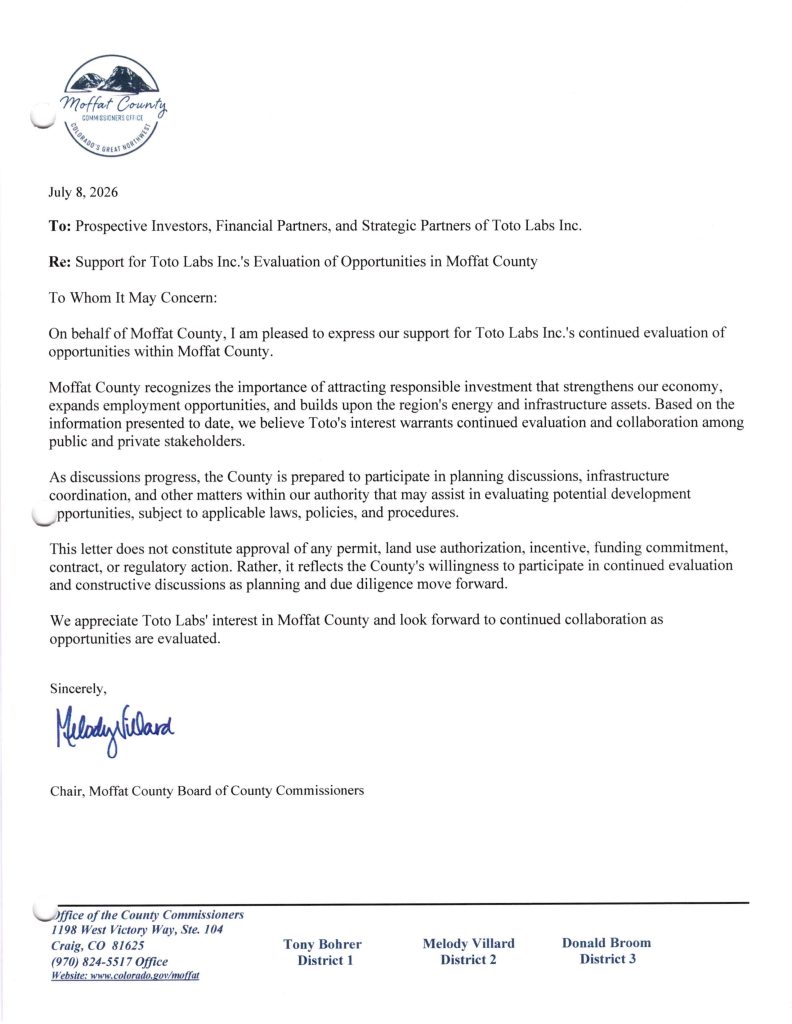
The county cites these letters in rejecting suggestions that information was intentionally withheld.
The Craig Press has contacted Pure-Green regarding the information within Villard’s letters.
“Moffat County has been transparent regarding the existence of these companies and their interest in the region,” the release states.
Public availability of the July 14 documents, however, is a separate question from whether that interest was clearly communicated to residents attending the Aug. 5 meeting.
When a resident asked Miller where the data center initiative came from, she said she had been monitoring what was happening in counties and cities across the country.
Asked directly whether beginning the review was her idea, Miller responded, “It was my idea.”
She later said the county needed regulations in place “if this comes our way.”
The county’s latest statement does not dispute those comments. Instead, it says the regulatory review was driven by state and national trends and was not initiated on behalf of a specific applicant or project.
“While expressions of interest from private parties reinforce the importance of being prepared, the ongoing regulatory review is not tied to any one company or conceptual project,” the release states.
Questions still remain regarding Miller having already spoken with representatives connected to potential development, and why that information was not provided when residents directly asked why the county was suddenly reviewing data center regulations.
The county’s release emphasizes that preliminary economic development discussions routinely occur without becoming formal projects.
Officials said they have entertained concepts ranging from greenhouses and geothermal development to solar projects, carbon sequestration, advanced nuclear energy and housing development, many of which never advance.
While that may explain why officials did not treat the Pure-Green and Toto conversations as projects requiring a land-use process, it does not fully address whether residents asking about the origin of a data center-specific regulatory effort were entitled to know that companies had already discussed potential development with the same officials involved in shaping that review.
Haerle, meanwhile, said his discussions with Moffat County centered on an Aug. 27 Club 20 educational meeting rather than the two companies.
He said he has participated in planning calls with Miller, Comstock and other county personnel about the event, but also noted that any specific data center interested in Moffat County was never discussed with him.
Haerle also said Comstock contacted him at 5:09 p.m. Thursday specifically to correct the inaccurate NDA statement. Haerle said Comstock did not discuss the two companies, did not indicate he was calling at the commissioners’ direction and did not discuss his own involvement in the companies’ contacts.
The county’s newest release now confirms Comstock was one of the officials who met with representatives.
Neither Comstock nor Miller had responded to questions from the Craig Press as of 8:30 p.m. Friday. Messages sent to Comstock’s and Miller’s Facebook accounts also went unanswered, raising further questions about whether either county official would go on the record regarding their knowledge of county conversations with data center firms before Aug. 5.
What is now established is that two identified companies explored opportunities in the Trapper area, that their representatives met with the commission chairman and Comstock, that separate discussions occurred with Miller and that documents concerning the companies appeared in county materials weeks before the Aug. 5 meeting.
The remaining issue is no longer whether contact occurred. It is how much officials knew about that interest when the public began asking questions, what those discussions involved and whether the distinction between an exploratory inquiry and a formal project explains what residents were told.






Support Local Journalism
Support Local Journalism
Readers around Craig and Moffat County make the Craig Press’ work possible. Your financial contribution supports our efforts to deliver quality, locally relevant journalism.
Now more than ever, your support is critical to help us keep our community informed about the evolving coronavirus pandemic and the impact it is having locally. Every contribution, however large or small, will make a difference.
Each donation will be used exclusively for the development and creation of increased news coverage.