Moffat County declares non-sanctuary status amid illegal immigration concerns
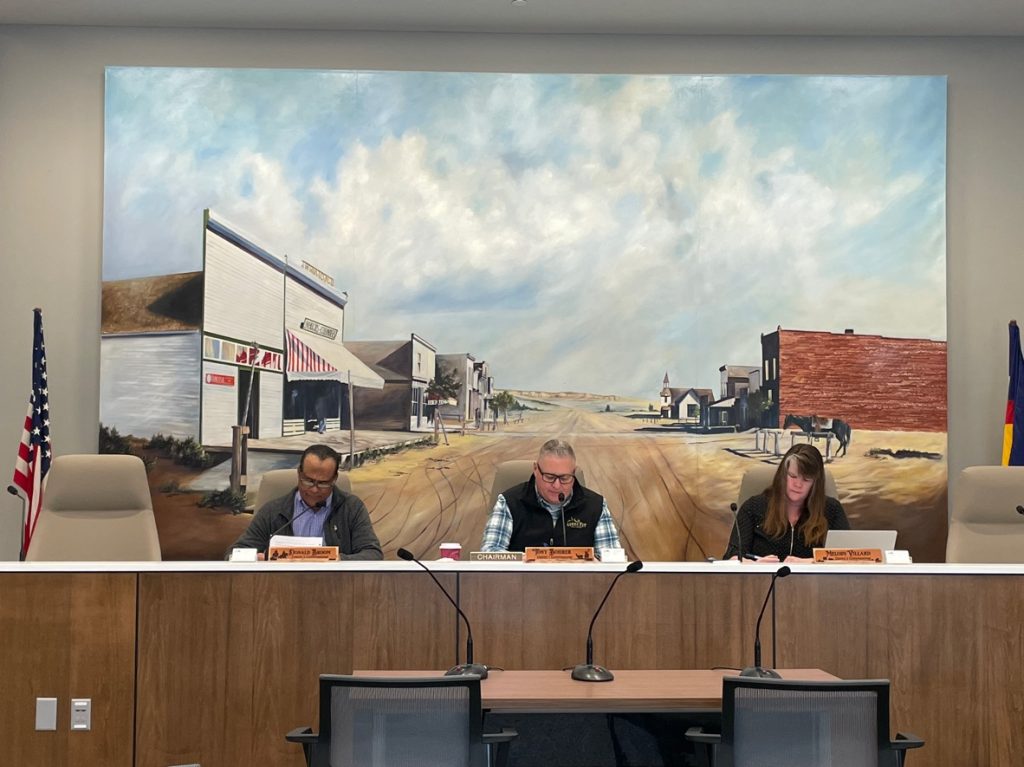
Ashley Dishman/Craig Press
On Tuesday, county commissioners took a proactive stance by adopting a resolution declaring Moffat a non-sanctuary county.
The resolution aims to address concerns about the potential for illegal immigrants to be bused from sanctuary cities like Denver to Craig. Moffat County Commissioner Tony Bohrer said that the resolution stems from an email he received regarding the status of Mesa, Garfield and Routt counties.
Bohrer said he reached out to officials in Mesa and Garfield counties to see if they are or plan to become sanctuary counties, and both counties responded with a firm “absolutely not.”
Bohrer added that that Mesa County commissioners subsequently set to work on a non-sanctuary resolution of their own, which in turn framed part of Moffat County’s resolution.
According to Bohrer, the resolution seeks to convey a clear message: Moffat County lacks the resources and capacity to handle a significant influx of illegal immigrants.
“We just don’t have it,” Bohrer said. “We don’t have enough resources to help the people in our own community, let alone have a bunch come from outside.”
Commissioner Melody Villard emphasized that the decision was rooted in fiscal responsibility and maintaining the financial health of the county.
She said county commissioners have individually engaged in discussions with the Department of Homeland Security, law enforcement officers and public health officials concerning the community’s current needs and experiences, and have considered the potential overflow of issues from larger cities like Denver into smaller communities like Moffat County.
Villard referenced Gov. Jared Polis’ assertion that immigration is a statewide problem, but she disagreed with the governor, as Villard asserted Moffat County has never asked nor offered to be a sanctuary county.
“We wanted to make a clear statement that we can’t take additional need on our resources that are already thin,” she said.
Villard said Moffat County commissioners are not against people coming into the country legally or seeking asylum, but they feel like “there’s a lot happening at the borders that’s not captured and now is spreading throughout the rest of the United States.”
“And it’s our job to to secure Moffat County,” Villard said.
Commissioner Donald Broom motioned to approve the resolution with Villard seconding the motion. Following the motion and a second, Bohrer highlighted the financial struggles Denver is facing, such as redirecting millions of dollars from essential services to address immigration challenges.
“Moffat County and the city of Craig don’t have $5 million or even $1 million just to throw at something (like that),” Bohrer said.
Villard added that Denver has anticipated a $108 million budget shortfall while still accepting more residents.
A community member in attendance interjected to ask if commissioners knew what the total number of people being accepted into Denver was. Bohrer responded that many numbers get floated out there and he’s not sure anyone really knows exact figures.
The commissioners’ discussion was interrupted a second time by another community member who suggested that non-governmental organizations could be a problem. The speaker went on to directly reference local churches, saying that churches will step up to offer help.
Forgoing a response to the comment, the commissioners finalized the adoption of the letter, with Villard seconding Broom’s initial motion.
Following the resolution’s approval, commissioners also agreed to send the mayor of Denver a letter regarding Moffat County’s non-sanctuary status. Villard described the letter as a courtesy to a fellow elected official, saying it aims to explain the reasons behind Moffat County’s decision and dissuade relocating illegal immigrants in Moffat County.
“In that letter, we discussed that we’re about to lose a big percentage of our property tax and this is the reason, you know?” Bohrer explained.
“It’s not that we don’t love people. I mean, we love people,” he continued. “It’s the simple fact that you just cannot physically do what you can’t do and what you can’t pay.”




Support Local Journalism
Support Local Journalism
Readers around Craig and Moffat County make the Craig Press’ work possible. Your financial contribution supports our efforts to deliver quality, locally relevant journalism.
Now more than ever, your support is critical to help us keep our community informed about the evolving coronavirus pandemic and the impact it is having locally. Every contribution, however large or small, will make a difference.
Each donation will be used exclusively for the development and creation of increased news coverage.