Perseid Meteor Shower, which inspired John Denver’s ‘Rocky Mountain High,’ will peak this month with up to 70 shooting stars per hour
Colorado’s certified DarkSky Places, like Breckenridge, Old Snowmass Village and Mesa Verde National Park, are top locations to view the meteor shower
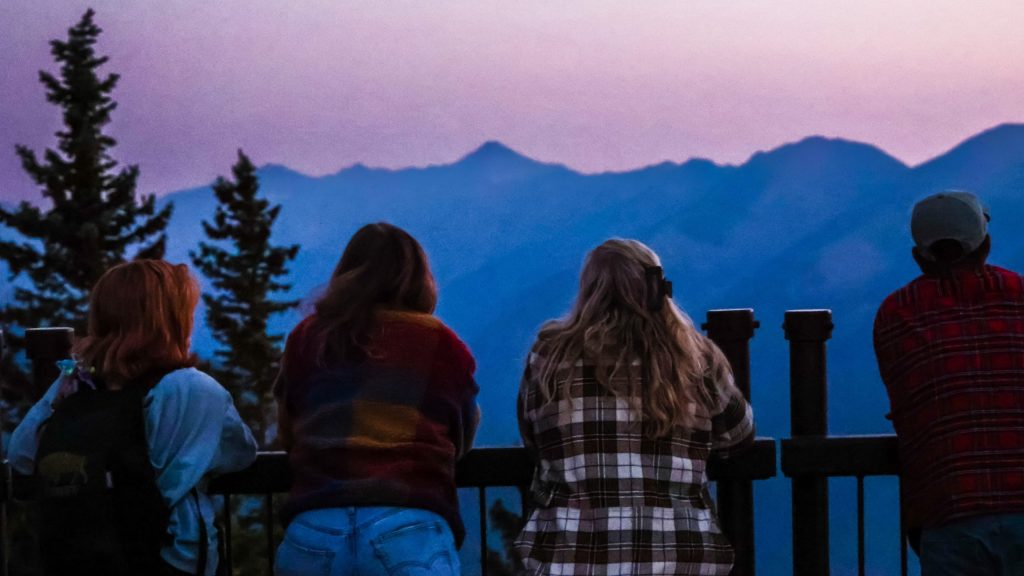
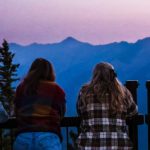
Austin Colbert/The Aspen Times
A meteor shower known for “raining fire” in Colorado Rocky Mountain skies will peak with dozens of shooting stars per hour this month.
The Perseid Meteor Shower will reach its peak on the night of Aug. 12. Colorado astronomy guide Mark Laurin — better known as Astro Mark — said that every year when the summer meteor shower rolls around guests at his stargazing events remind him that the shower was the inspiration for John Denver’s “Colorado Rocky Mountain High.”
“The spirit of that song is exactly what we’re talking about,” Laurin said, recalling parts of the lyrics that refer to the meteor shower. “‘The shadow of the starlight is softer than a lullaby.’ ‘I’ve seen it raining fire in the sky.’ What he’s really just talking about is looking up and experiencing awe.”
The Perseid Meteor Shower is one of the best and brightest meteor showers of the year. In his stargazing blog, Laurin calls the shower “the granddaddy of them all” and notes that it could bring up to 70 meteors per hour at its peak.
A member of the Denver Astrological Society and a mentor with DarkSky International, Laurin leads astronomy tours in Colorado. On Aug. 12, he’s hosting a free astronomy night in Frisco where guests can learn about the night sky while watching the Perseid Meteor Shower.
Laurin said one of the things “that makes this year unique and really extra special, wonderful (and) delightful,” is that the peak of the meteor shower is one day after the new moon, so it will be dark and the shooting stars will be vibrant. He said the Perseid Meteor Shower, which began in mid-July and lasts through Aug. 24, is a reason to get family and friends together and spend a night under the stars.
“Just get a chair, sit back, relax and look up,” Laurin said. “Allow the celestial big screen to entertain you for a couple hours. This year is pretty big. I’m getting excited about it.”

How to view the Perseid Meteor Shower in Colorado
A meteor, often called a “shooting star,” is the bright streak of light seen when a small piece of space debris burns up in the atmosphere. A meteor shower occurs when the Earth’s orbit passes through a stream of debris left by a comet or an asteroid, causing a shower of shooting stars as the debris burns up in the atmosphere.
In this case, the Earth is passing through the debris of the Comet 109P/Swift-Tuttle, a large comet that takes 133 years to orbit the sun and was first discovered in 1862, Laurin said. While shooting stars will be visible all night, he said the debris will be hitting the Earth’s atmosphere most directly around 3 a.m. on Aug. 13, which will likely be the height of the show.
“The thing that makes the Perseids so spectacular is that the comet is heavy in elements, so it tends to be more colorful than most showers,” Laurin said. “You’ll get blues, you’ll get oranges, you’ll get the yellows, you’ll get the greens from calcium, silicon, iron, nickel, magnesium, things like that. That’s what makes the Perseids special.”
The radiant point of the meteor shower — or the place where meteors will appear to emanate from — will appear above the north-to-northeastern horizon around 10 p.m. and slowly arch higher across the sky through the night, Laurin said. He said the radiant point will be just below the constellation of Cassiopeia, which is formed of five stars that create a “W” shape.
To get the most out of the meteor shower, Laurin recommends finding a dark place away from bright lights and putting away phones and electronics to allow your night vision to develop. He said it’s best to get comfortable with a chair or a blanket and lean back so that you can see the whole night sky — since meteors can appear from anywhere.
“People, when I’m out there doing these stargazing events, they’re never prompted — they just share stuff,” Laurin said. “They ask these questions: What’s the meaning of life? Are there others out there? How do I fit in? That’s the big question that comes up early. How do I fit within this universe, this cosmos? The answer is: you are part of it.”

Why Colorado is among the best places to see the Perseids
“Colorado Rocky Mountain High” — one of the most iconic songs about the state — was written after John Denver moved to Aspen in 1970 and spent August nights camping under the stars during the Perseid Meteor Shower, according to historians.
The song describes the meteor shower “raining fire in the sky” and “the shadow of the starlight” as shooting stars left smoky trails in the night sky. Laurin said the phenomena of shooting stars leaving streaking trails in the sky is especially common during the Perseids. He recalled the reaction when one such meteor dazzled at a recent event he hosted.
“I looked up and this thing, this meteor, just streaked across the sky. It was blue, then it turned orange and just exploded,” Laurin said. “Everybody saw it and they were just spellbound. As we all witnessed it, I said ‘Look! Look! Look! Look and see if you can see the smoke trail after the meteor’ — and some people saw it.”
Denver’s song reflects on the joy of experiencing the Perseids in Colorado’s mountains with friends, as well as the need to protect nature from the encroachment of human development, Laurin said. He said Colorado is such a good place to stargaze because its remote places have been protected from light pollution.
Colorado has 20 certified DarkSky Places, including towns like Breckenridge, Old Snowmass,Paonia, Crestone, Ridgway and Westcliffe as well as locations like Dinosaur National Monument, the Gunnison Gorge National Conservation Area, Black Canyon of the Gunnison National Park and Mesa Verde National Park.
The designation from DarkSky International certifies places that work to reduce artificial light and protect the night sky for stargazing and the benefits it provides to nocturnal wildlife. Other towns including Frisco, Leadville, Meeker, Grand Lake, Estes Park, Telluride and Nederland are also working toward the certification.
Being at high elevation can help stargazers find a clear view of the sky because it gets them above the dense air that holds hazes and fog, according to the National Aeronautics and Space Administration.
“Go out and stargaze. Go out with friends. Go out with strangers,” Laurin said. “Get a chair, relax and just sit there for 20 minutes. If you sit there for 20 minutes, I guarantee you you’ll stay for 30. If you sit there for 30, you’re going to see an amazing fireball. Then you’re going to be out there for 45. At that point, the conversation you have with the people you are with is just magical.”





Support Local Journalism
Support Local Journalism
Readers around Craig and Moffat County make the Craig Press’ work possible. Your financial contribution supports our efforts to deliver quality, locally relevant journalism.
Now more than ever, your support is critical to help us keep our community informed about the evolving coronavirus pandemic and the impact it is having locally. Every contribution, however large or small, will make a difference.
Each donation will be used exclusively for the development and creation of increased news coverage.