Lawmakers water down bill to protect Colorado workers from extreme temperatures
Proponents of the measure say they were forced to strip provisions that could have cost the state millions of dollars amid a major budget shortfall

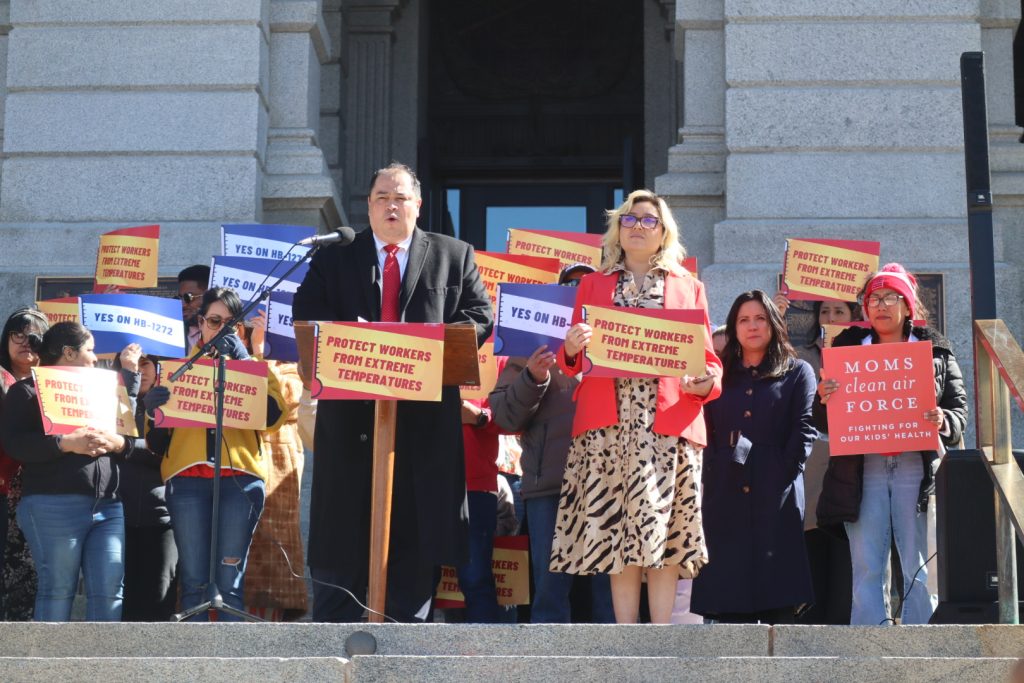
Robert Tann/The Aspen Times
Key components of a Colorado bill aimed at protecting workers from extreme temperatures were stripped last week, with lawmakers saying the funding just isn’t available amid the state’s ballooning budget shortfall.
Initially, House Bill 1272 would have required employers to develop site-specific plans for protecting workers from extreme heat and cold, such as providing paid breaks and access to water and rest areas. Employers would also have been required to follow state-approved training standards for workers and could have faced civil penalties for not complying.
Those provisions, which would have gone into effect in 2028, would have applied not just to private businesses, but also to state agencies, which fiscal analysts projected could have cost the state over $5 million annually.
When the bill came up before the House Health and Human Services Committee on March 18, proponents of the legislation axed those provisions.
“It’s extremely frustrating,” bill sponsor Rep. Elizabeth Velasco, D-Glenwood Springs, said on Tuesday, adding that the state’s budget shortfall for next fiscal year, which has now ballooned to $1.5 billion, means “there’s a lot of important things that we’re not able to fund.”
The Health and Human Services Committee, which ultimately voted to advance the bill, left in place a provision requiring the Colorado Department of Labor and Employment to collect data on employers and existing safety practices as well as develop an optional model plan that employers can use to help prevent workplace illnesses and injuries due to extreme temperatures. That would have to be done in 2027.
Velasco said those measures are still a meaningful step forward for advocates who’ve been calling for action at the state level to protect workers from the impact climate change is having on severe weather. She hopes that removing other aspects of the bill will eliminate, or at least greatly reduce, its fiscal impact.
The bill is being championed by a coalition of progressive groups and labor organizations, including Voces Unidas, a Glenwood Springs-based immigrant advocacy group that operates across the Western Slope.
During a rally to support the bill at the Capitol earlier this month, Voces Unidas President and CEO Alex Sanchez shared stories of workers who’ve been affected by extreme temperatures while on the job, including a landscaper who suffered heat stroke and a snow-removal worker who lost a finger to frostbite.
“People are getting sick. People are getting hurt. And too often, they’re being expected to just keep working,” Sanchez said.
Business groups and Republicans voiced concern that the bill could further add to an already heavily regulated business environment in Colorado and that the legislation would be redundant.
Michael Cox, an attorney representing the Colorado Chamber of Commerce, said during last week’s bill hearing that state employers are already subject to federal worker safety standards under the Occupational Safety and Health Administration.
He added that state and federal agencies also already collect data related to extreme temperatures in workplaces.
“Simply put: Requiring the (Colorado Department of Labor and Employment) to conduct another broad data collection and analysis effort would be an unnecessary use of state resources in an already tight budget year,” he said.
Bill proponents say they are responding to what they see as threats to the Occupational Safety and Health Administration under the Trump administration, which has moved to roll back some federal safety regulations.
“There’s definitely a need for a state structure that protects workers,” Velasco said.
This is the second year she has run legislation seeking to protect workers from extreme temperature risks. A more sweeping bill last year that would have imposed specific mandates on employers died in its first committee hearing amid objections from the business community that the requirements were too stringent.
She said even if she doesn’t get everything she wants passed this year, she’d be open to exploring further legislation in future years.
HB 1272 is also sponsored by Rep. Meg Froelich, D-Englewood, and Sens. Lisa Cutter, D-Littleton, and Mike Weissman, D-Aurora.
The bill passed its committee hearing in an 8-5 vote, with all Democrats in support and all Republicans opposed. The bill now heads to the House Appropriations Committee, where it will need to pass another vote before it can make it to the House floor.






Support Local Journalism
Support Local Journalism
Readers around Craig and Moffat County make the Craig Press’ work possible. Your financial contribution supports our efforts to deliver quality, locally relevant journalism.
Now more than ever, your support is critical to help us keep our community informed about the evolving coronavirus pandemic and the impact it is having locally. Every contribution, however large or small, will make a difference.
Each donation will be used exclusively for the development and creation of increased news coverage.