A look at the ‘transformative’ effect beavers have had on an Aspen-area testing ground for regenerative agriculture
he Farm Collaborative is a multi-purpose regenerative farm, camp, school and resource center, now leveraging knowledge from beavers to improve water amid drought

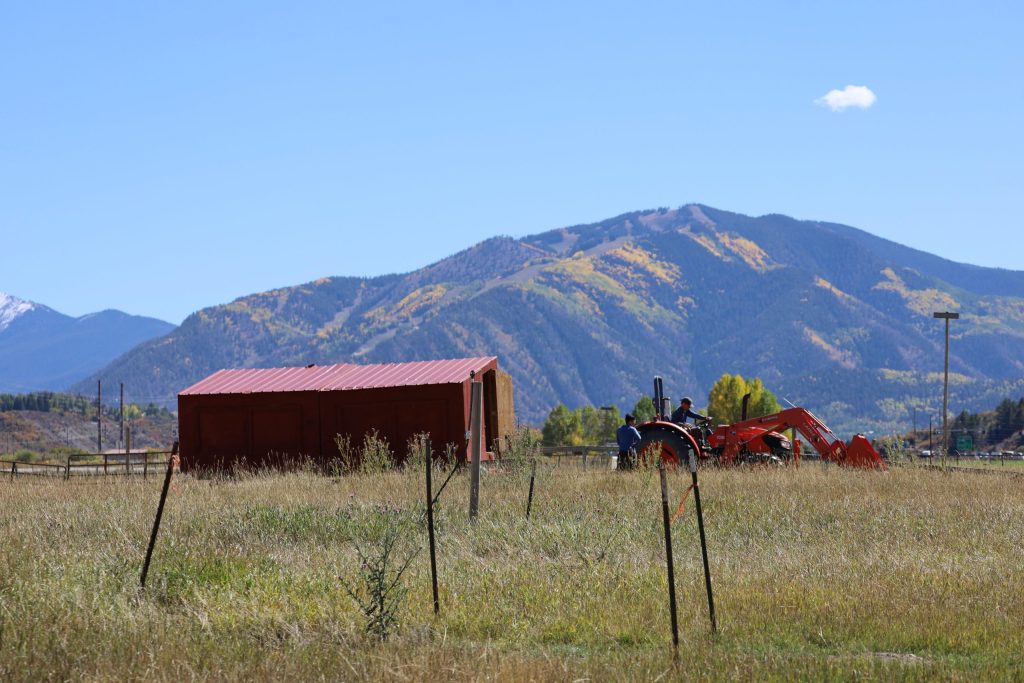
The Farm Collaborative/Courtesy Photo
Three years ago, beavers returned to an Aspen-area testing ground for regenerative agriculture.
What’s happened since has been nothing short of transformative, according to Eden Vardy, who started The Farm Collaborative in 2008 with the ambitious goal of finding solutions to climate change.
“Everything has transformed,” Vardy said. “There’s been just so much new growth in the riparian area. We’re starting to see predatory birds explore; I’ve seen a handful of golden eagles and bald eagles and a lot more coyotes and foxes coming into the area. But the most significant is the growth of the water table.”
Pitkin County — and much of the north-central mountains in Colorado — has faced an exceptional drought for most of the spring and summer months, as the historically low snowpack and record-setting heat have driven streamflows to critical lows.
“This year, when we were anticipating our smallest year of water ever — which it still is, we are now starting to go dry — we had easily two months of more water than we thought we would this year as a result of really the storage systems that the beavers developed for us,” Vardy said.
Beavers’ role as a keystone species and ecosystem engineers has been increasingly recognized by scientists, environmentalists and water providers as an effective means of increasing drought resiliency.
A project at Rocky Mountain National Park mimicking beavers has received notoriety for its early success in restoring wetland benefits to a drying landscape. Colorado Parks and Wildlife, during a time when Vardy served on its commission, responded to beavers’ growing popularity with a strategy to guide future species’ conservation and management. In July, the state agency also released beavers in two state wildlife areas near Rifle amid some man-made beaver structures to restore riparian ecosystems.
In Aspen, Vardy said he’s learned a lot from the beavers’ work about water and how it flows.
“In the West we have this almost addiction to get water to the lowest point as quickly as possible,” he said. “For beavers, it’s not about getting it where it’s going; it’s about slowing it down along the way.”
Slowing it down can build groundwater storage and improve soil health, Vardy added.
The transformation took place at The Farm Collaborative’s headquarters at Cozy Point Ranch, an open space property owned by the city of Aspen. The nonprofit serves as not only a regenerative farm, but a camp, school and resource center for the local community and farmers.
Vardy, who immigrated with his family from Israel to Aspen in 1988, grew up in employee housing across from the ranch and watched as the property transitioned from a bison ranch to a cattle ranch. When the collaborative was approached in 2010 to establish a presence at the site, Vardy saw it as a great opportunity because it had been extracted from for over a century.
“I would always see little dust tornadoes; it was very trampled land,” Vardy said. “I was especially excited when we were invited to participate in that piece of land because there was a chance to really test some of the concepts of regeneration and taking something that could be managed slightly differently to return it to natural wonder, while at the same time providing food for our community.”
While Vardy sees that the collaborative has a long way to go, he also said they’ve made “tremendous progress,” exemplified in part by the beavers’ return.
“I can’t tell you exactly why they came back,” Vardy said. “There were tactics that we did in hopes that they would one day return, including fencing out our riparian area, incorporating some deliberate plantings that would inspire them to return. But obviously, the ecosystem is complex and does things for its own reasons. But the fact that they came back was a signifier that things are now on the right path.”
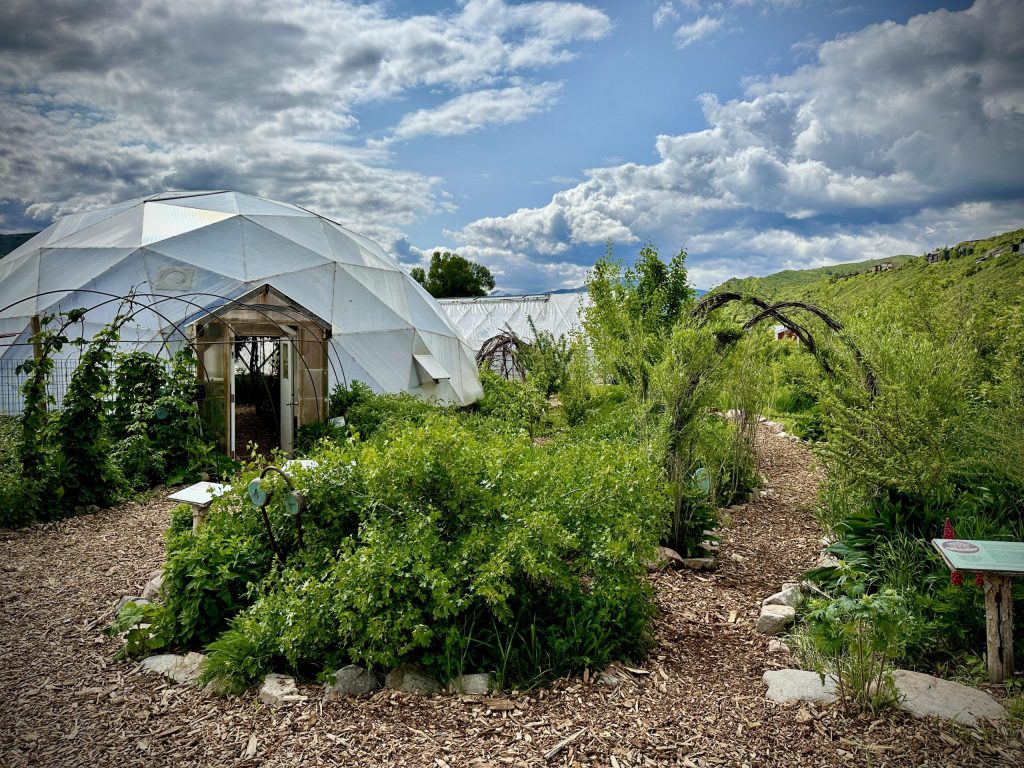
Seeing the benefits, the nonprofit has redone its irrigation systems to mimic how beavers modify riparian zones and “embrace the potential of humans as a keystone species on the land” — a concept that initially led Vardy to create The Farm Collaborative.
The way Vardy sees it, to address the impacts of climate change, humans could act as a keystone species, and therefore “in a way that actually can create more goods, not just for us, but for all the creatures we share the land with as a result of our input on the landscape.”
This contrasts with other views of sustainability or “green” efforts as “doing a little less bad,” where the “solution is less human intervention,” Vardy added.
“That just didn’t feel very inspiring or momentum-oriented for how we can really come together to solve some of these challenges,” he said.
Understanding the benefits of regenerative agriculture
Today, The Farm Collaborative — through youth and community programming as well as farmer support efforts — is focused on helping individuals explore and understand regenerative agriculture. The practice includes efforts to improve soil health, restore biodiversity and enhance water management.
“We are in a dust bowl again right now, just like we were during the Great Depression,” Vardy said. “Our tactics in agriculture, while productive, can have an adverse impact on the land in a way that prohibits our capacity to grow food, and regeneration is just utilizing the land differently, incorporating different techniques — instead of tilling, you can crimp from a grain operation, adding animals to the landscape for fertilization and soil building, cover cropping, crop rotations.”
Regeneration is not, however, simply an altruistic endeavor, Vardy said.
“A beaver doesn’t show up in a water system because it’s altruistic and it wants to see more trout, more insects or more biodiversity; the beaver shows up because it wants to eat willow and it wants to raise its family in a healthy and comfortable way,” Vardy said. “The byproduct of that work is that all these cascading biological effects take place.”
In the same way, regenerative agriculture is about making farms productive in the long term in a way that “restores the cascading effects for biology around the farm,” he added.
“I think the real reward of regeneration is the legacy of passing on a piece of land that is more productive to the next generation,” Vardy said.
“It’s how it was done for millennia, and we took this detour in the path towards efficiency,” Vardy said. “Now it’s a matter of taking what we’ve learned from that pathway toward efficiency with the technology and land stewardship that we have developed over millennia and bringing them together for the next generation of what agriculture and land management look like.”
This does not mean there aren’t challenges for producers or ranchers to adopt new practices.
“The biggest of which is that we quite frequently have to make a choice of productivity now versus productivity later,” Vardy said.
For example, while producers and researchers in Colorado have seen that improving soil health or transitioning to more native grasses can reduce water consumption and increase forage production, it’s a process that takes a few years of no production and effort before the benefits are realized.
“That’s a choice that most farmers and ranchers can’t afford to make,” Vardy said. “For this to really work, we’re going to need policy change in a way that can support farmers to afford those changes.”
The Farm Collaborative’s rancher support arm has a few programs aimed at targeting these challenges. In addition to smaller programs for agriculture apprenticeships, training programs and an equipment library, it has an established program that provides 0% interest loans to farmers and food entrepreneurs to invest in regenerative practices.
Started in 2014, the 2Forks Club has become completely self-sustaining, Vardy said, taking in community contributions that are reinvested into local farms and food businesses through the loans. The average loan is about $50,000, and the fund has invested around $1.29 million in the past 12 years.
While Vardy has varying goals with The Farm Collaborative’s work, his biggest target is an ambitious one.
“My end goal, which is probably going to sound naive or maybe out of touch, is turning drought around in the West,” Vardy said. “I truly believe that if all this happens at scale across the West, that in a couple of decades we could turn around drought in the Western United States, because when water moves across a landscape like this, you see that it eventually leads to significant tree growth. That tree growth leads to more evapotranspiration, which leads to a small water cycle where we have more rain in a particular region.”



Support Local Journalism
Support Local Journalism
Readers around Craig and Moffat County make the Craig Press’ work possible. Your financial contribution supports our efforts to deliver quality, locally relevant journalism.
Now more than ever, your support is critical to help us keep our community informed about the evolving coronavirus pandemic and the impact it is having locally. Every contribution, however large or small, will make a difference.
Each donation will be used exclusively for the development and creation of increased news coverage.