Yampa Valley Housing Authority hopes to collaborate with Craig on housing needs
City of Craig/Courtesy Photo
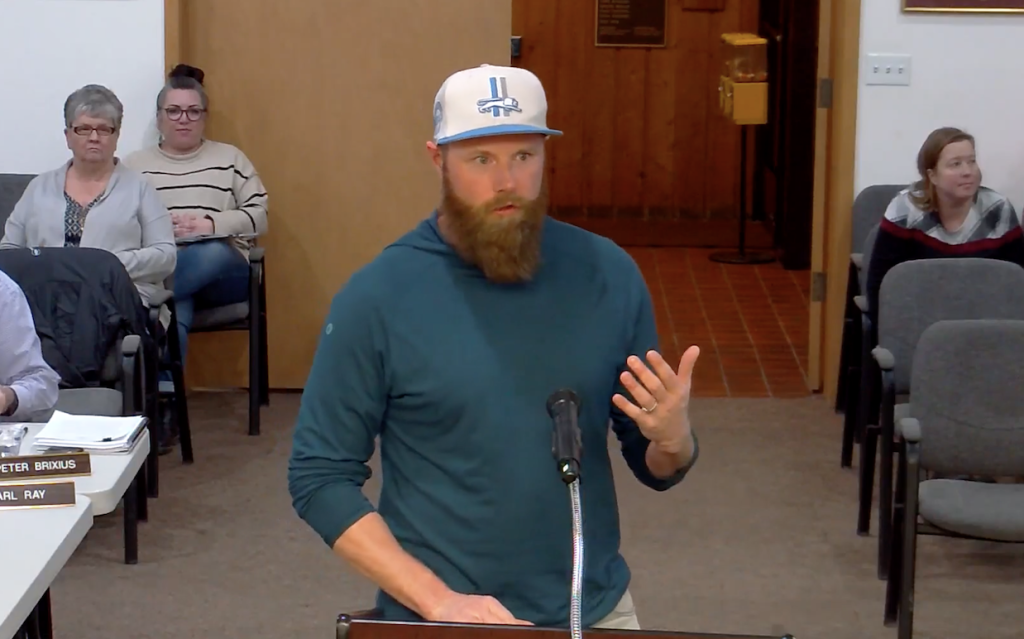
On Tuesday, Yampa Valley Housing Authority Executive Director Jason Peasley engaged in a dialogue with officials from Craig, shedding light on the valley’s affordable housing crisis and presenting new information about the Brown Ranch housing project.
At a Craig City Council meeting, Peasley began by outlining the severe housing shortages that have plagued Steamboat Springs and Routt County in recent years, saying the area continues to struggle to deliver enough housing to address the needs for people who work in Steamboat Springs and the greater Routt County area.
Peasley also said the need has his spilled over into Moffat County in many different ways, especially over the last several years.
With a demand for approximately 1,400 more housing units in Steamboat Springs alone, the YVHA has recently been working to address the crisis through strategic partnerships and leveraging local resources. According to Peasley, the housing issues in the region span from availability and affordability to mobility and stability.
Peasley said, simply put, there’s just not enough housing to meet demand for people who need to live and work in Steamboat Springs, as well as people who vacation and own property in the area. He also said there are issues with the affordability of the available houses.
“Most people who are working regular jobs aren’t affording $3 million homes in Steamboat — it’s just not happening,” he said. “We have a lot of those (expensive homes), but they’re just not available to the folks that actually earn wages.”
Peasley shared that Steamboat is also facing issues with housing stability, including frequent rent increases and property conversions to short-term rentals.
“We have a lot of anxiety in our population around ‘Where am I living next year or even next month?'” he revealed.
The housing shortage is limiting mobility within the market as many residents are “sort of holding on with white knuckles to whatever they’ve got,” Peasley observed.
From a business standpoint, the housing problem is also leading to a business growth problem.
Peasley remarked that there is not enough housing to bring in new employees, expand businesses or “even just keep the doors open on a regular basis.” He said that the effects are being felt in the professional sector as well as the service sector, including at local schools and hospitals.
Peasley noted that the area is experiencing “a simple supply-demand imbalance.”
“We’re never going to kill demand for the area,” Peasley said, emphasizing that “we love this place and a lot of (other) people do, too.”
So, he contended, the issue will have to be dealt with on the supply side. Which, for Steamboat, means focusing on westward expansion — a plan that’s been bandied about for the past three decades, according to Peasley.
That lead Peasley to talk about the plan for Brown Ranch, which he called “the largest project we’ve ever undertaken — possibly even the largest in the state — for affordable housing.”
The undertaking aims to build 2,264 units over 20-plus years, addressing a variety of housing needs, including apartments, condos, townhomes and single-family homes. The development will feature amenities such as medical services, child care facilities, dining and recreational spaces, while trying to foster compact, walkable neighborhoods.
Financing for Brown Ranch will come from a mix of short-term rental taxes, federal tax credits, state and federal grants, philanthropic contributions and private capital. Peasley assured that there would be no increase in taxes involved.
Throughout the past few years, YVHA has been working to leverage relatively small amounts of community resources to build developments.
Peasley highlighted the YVHA’s success in leveraging $4.5 million in revenue to create $103 million in developments. The housing authority has also had the advantage of a mill levy that brings in about $1 million a year to be reinvested in the area for the past eight years.
According to Peasley, Brown Ranch is being built to serve a significant range of incomes to make sure that everyone who works in Routt County has an opportunity to live near their work.
He said that an important foundational element of the project for the YVHA was to create and preserve opportunities for choice for all the people that work in the Yampa Valley. Peasley said that, optimistically, the first units at Brown Park could be ready for occupancy in late 2026.
Peasley concluded his presentation by recognizing that although the housing authority includes “Yampa Valley” in its moniker, its current work is limited to Steamboat and the immediate surrounding area.
He acknowledged that there is a housing need across the entire valley being combated by multiple groups, and stressed his hope for future regional collaboration as “an opportunity for all of us to come together and pool our resources and make sure that we’re leaning on each other’s expertise as much as possible so that we can deliver the types of housing solutions that our entire valley needs.”
Craig Mayor Chris Nichols assured Peasley that Craig officials would “welcome the collaboration.”
Nichols also brought up the city’s current 8th Street Redevelopment Project, which he called “the first larger multi-family project that’s been built in this community in 40 years,” as well as the potential upcoming Woodbury affordable housing complex.
“The collaboration would be great,” he said before enquiring whether Peasley had “any more $24 million anonymous donors that (he) can send down-valley?”
“I wish I did,” Peasley laughed.
After Peasley concluded his presentation, various council members and officials took the opportunity to pick his brain on short-term rentals, public-private partnerships and property management.
“We appreciate the relationship we’ve had with (Peasley), with the board of directors — we know quite a few of these folks,” City Manager Peter Brixius said.
“Hopefully we can continue working together on housing projects moving forward,” Peasley responded.



Support Local Journalism
Support Local Journalism
Readers around Craig and Moffat County make the Craig Press’ work possible. Your financial contribution supports our efforts to deliver quality, locally relevant journalism.
Now more than ever, your support is critical to help us keep our community informed about the evolving coronavirus pandemic and the impact it is having locally. Every contribution, however large or small, will make a difference.
Each donation will be used exclusively for the development and creation of increased news coverage.