Mosquitoes are abundant in western Colorado this year. Know how to safely and effectively deal with the buzzing pests.
Vail Daily
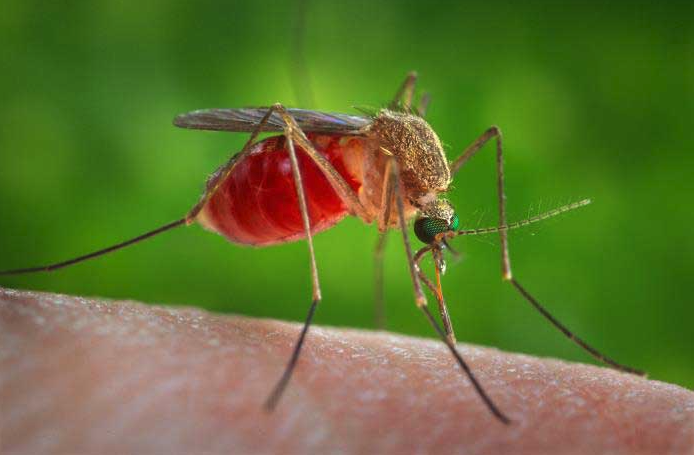
Mosquito
The near-historic snowfall this winter is still making itself known in early July, as all the snowmelt and ensuing moisture has brought on what feels like more mosquitoes to Colorado’s high country.
While there isn’t exact data to back it up (yet), there are likely many more mosquitoes in Colorado this year.
“I haven’t heard reports of that happening, but it would make sense with our moisture this year,” said Melissa Schreiner, an entomologist for Colorado State University Extension in Grand Junction. “There’s more cockroaches, there’s more ticks, there’s more biting flies. It would make sense there would be more mosquitoes.”
Areas in the western United States have seen an uptick in the insects because of the significant snowfall over the winter, according to Daniel Markowski, a technical adviser with the American Mosquito Control Association. Snowpack later leads to melt and flooding or an excess amount of water, which later dictates the amount of mosquitoes that appear.
Colorado has also seen a lot of rain this spring, which paired with temperature, also factor into the amount of mosquitoes in an area.
Mosquitoes are most prevalent May through September, but their activity depends on the weather, Markowski said. The pests start making an appearance once temperatures are consistently above 50 degrees and love warm, humid weather.
Not every type of mosquito will bite a human, and only female mosquitoes bite, as they need blood to produce eggs.
There are about 45 species of mosquito in Colorado, and despite what some may think, they can be found at nearly every elevation. Different mosquitoes will be active at certain elevations and times of year, according to Schreiner.
“They thrive in areas where water resources are available because they require those for their breeding and reproductive cycles,” Schreiner said. “In years of high precipitation, which this year has occurred for Colorado, with the insane moisture we’ve gotten, there tends to be an increase in standing water and stagnant pools, that’s capitalized on by those mosquito populations. These conditions produce ideal breeding grounds for mosquitoes.”
How to make your home less mosquito friendly
No one can control the weather, but it’s still possible to have an impact on how many mosquitoes hang out nearby.
The biggest step one can take to prevent mosquitoes from multiplying is getting rid of standing water. Female mosquitoes lay their eggs on or near standing water, leaving the immature mosquitoes, or larvae to develop in the water, Markowski said. The larvae need leaves, soil, grass clippings or some other decaying organic matter to develop. Preventing such an environment can go a long way in preventing mosquitoes.
Dump or drain water from wherever possible, such as gutters, old tires, wheelbarrows, tarps, birdbaths or other objects. Intercept the mosquito lifecycle by doing so about once a week.
If there is water in a place that can’t be dumped, apply a larvicide. Products that contain bacillus thuringiensis israeliensis, or BTI, are environmentally friendly, according to Markowski.
“BTI is made from bacteria that kills mosquito larvae,” Markowski said. “A small amount, in the form of compressed donuts, briquettes, or granules is usually effective for up to 30 days. Just read the label and they’ll tell you exactly how to apply the products and where to use them.”
There are also companies that will use a handheld sprayer or a truck to cover more ground and repel the bugs at a larger scale.
Many truck-mounted or aerial mosquito spraying operations typically use adulticides to target mature mosquitoes.
“There’s simply too many places mosquitoes can be produced,” Markowski said. “So some adult mosquitoes will invariably hatch off, especially when environmental conditions are favorable to their reproduction.”
The standard is to use an ultra-low volume (ULV) method that is approved by the U.S. Environmental Protection Agency.
“When applied by a licensed vector control professional who follows label instructions, truck spraying poses minimal risk to people, pets, animals, and the environment,” states the Centers for Disease Control.


Support Local Journalism
Support Local Journalism
Readers around Craig and Moffat County make the Craig Press’ work possible. Your financial contribution supports our efforts to deliver quality, locally relevant journalism.
Now more than ever, your support is critical to help us keep our community informed about the evolving coronavirus pandemic and the impact it is having locally. Every contribution, however large or small, will make a difference.
Each donation will be used exclusively for the development and creation of increased news coverage.