‘Many successes and a lasting impact’: Craig officials begin process to fill Shannon Scott’s position as economic development manager


Ashley Dishman/Craig Press
As the City of Craig navigates a key period of economic transition, one of the people most closely associated with shaping a community-centered response is stepping away.
Shannon Scott, the city’s economic development manager for nearly five years, has resigned to accept a new position elsewhere in Colorado.
According to city leaders, Scott leaves behind a legacy defined by collaboration, long-range planning and a focus on building community-wide systems.
Scott was hired in 2021 following an extensive search that included city staff, City Council members and community partners. At the time, Craig was establishing its first full-time economic development position, a move Mayor Chris Nichols said reflected the city’s need to be proactive as the region’s fossil fuel-based economy shifted.
“That was a big step for the council,” Nichols said. “We saw the horizon and knew we needed to be aggressive.”
Prior to working in Craig, Scott spent five years in Texas with the City of San Angelo Development Corp., where she worked as an economic development specialist as well as a business retention and expansion coordinator. She focused on recruiting industry, managing downtown improvement grants and supporting the growth of existing businesses through tax-funded incentives.
Earlier in her career, Scott worked in digital marketing, advertising, nonprofit organizations and transportation and logistics. Those experiences were valuable in Craig, where economic development is tied to housing, infrastructure and workforce needs.
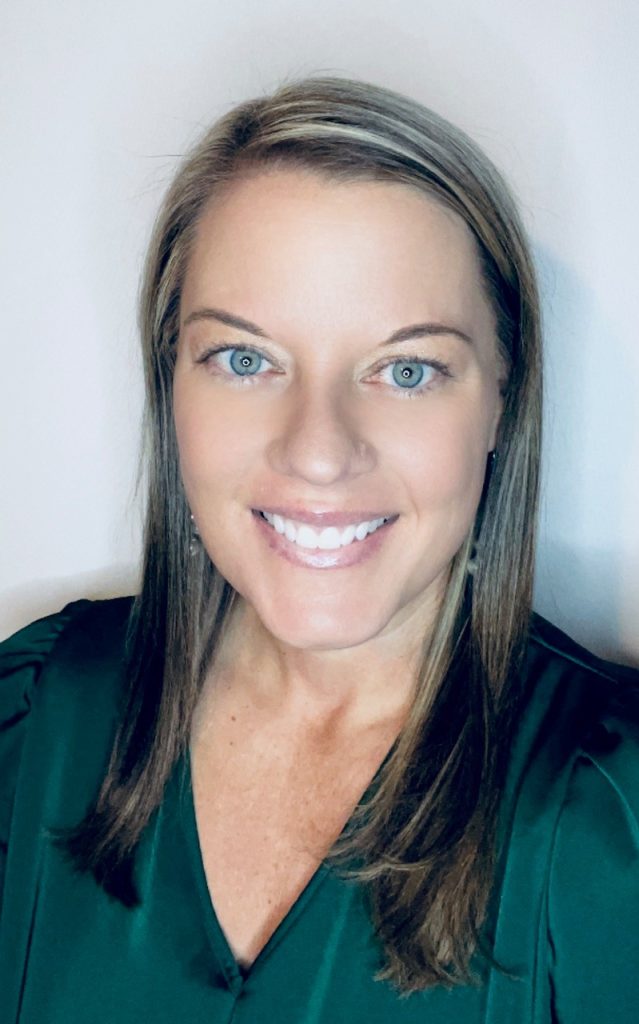
Scott, who had lived in Rangely in the late 1990s, saw the Craig economic manager position as an opportunity to support a region where the energy industry had begun to transition in new directions.
“I knew it was going to be challenging,” Scott said. “Economic development is complex on its own, but when you add an economic transition of this magnitude, the stakes are higher.”
Brixius said Scott stood out during the hiring process for her strategic thinking and ability to move projects from concept to implementation.
“While we had a general vision for what we hoped to accomplish, Shannon brought the experience, education and insight needed to turn that vision into action,” said Brixius.
Scott said housing quickly emerged as one of the city’s most pressing barriers to economic growth.
“If people don’t have a place to live, employers can’t grow and new companies can’t come in,” she said. “Housing really underpins everything.”
One of her earliest priorities was a housing needs assessment that involved public outreach and the selection of associated contractors. Brixius said the resulting data helped guide several housing initiatives, including the completed 8th St. townhome project and the Meadows housing project, which is expected to break ground in the coming year.
Another lasting contribution of Scott’s came in the reorganization of the Craig Economic Development Advisory Committee, or EDAC. Restructured in 2022, the committee includes representatives from finance, agriculture, real estate, education and the City Council.
Scott said the group creates a conduit between city government and the broader community while offering insight and accountability.
“These are people who care deeply about Craig and want to be part of shaping its future,” she said.
Nichols said the committee has become central to how the city approaches economic development decisions.
“That’s probably her number one accomplishment,” he said. “It’s something that will continue long after she’s gone.”
Scott also oversaw the expansion of urban renewal efforts in Craig. Brixius said she helped guide the creation and approval of several urban renewal plan areas, which involved coordinating and supporting projects that allowed businesses to access tax initiative-based financing.
Among those projects was the Bad Alibi Distillery, which opened within an urban renewal area in December. Nichols said Scott’s approach helped keep such efforts on track and on schedule.
“She was very methodical,” Nichols said. “That mattered with projects that are complex.”
Scott also worked to improve how prospective employers and developers view Craig, including the launch of the Discover Craig website, which serves as a resource for site selectors and investors.
Nichols said the platform increased the visibility of properties available for business development in Craig.
Scott said she believes one of Craig’s strongest assets is its workforce, particularly those transitioning out of coal-related employment.
“These are dependable and skilled people with experience you don’t find everywhere,” she said. “That’s something companies really respond to.”
One of the largest long-term projects Scott helped advance is the future Craig Business and Industrial Park. Scott said the city has secured nearly $4 million in grant funding to acquire the property and begin installing infrastructure.
“When you have shovel-ready sites, it removes a major obstacle,” she said. “It makes Craig more competitive.”
Scott also pointed to the city’s business plan competition as a program she hopes will continue after her departure. The initiative supports entrepreneurs, including residents seeking to remain in the community, as the economy shifts.
“Entrepreneurship is a critical piece of economic development,” Scott said. “It helps people invest in their future here.”
City leaders are also focused on filling Scott’s seat on the Moffat Economic Development Alliance, where she serves as vice chair. The group oversees settlement funds tied to the Tri-State energy transition agreement. Both Nichols and Brixius said a replacement would promptly need to be found following Scott’s departure.
Scott described the settlement as an achievement that “creates opportunities we didn’t have in Craig before.”
Scott said her hope for Craig remained consistent throughout her time as the economic development manager. She hopes the momentum she stepped into and was able to support continues to benefit the individuals and families who live in and around Craig.
“I want to see the jobs replaced,” she said of lost energy sector positions. “People who have worked here for generations deserve the chance to stay.”
She emphasized that progress depends on maintaining strong partnerships.
“Economic development is a team effort,” Scott said. “Nothing happens in isolation.”
The city has already begun the process of finding a replacement for Scott. Brixius said the search, which will be led by city staff, includes outreach through professional organizations such as the Economic Development Council of Colorado.
“This is not a simple position to fill,” Brixius said. “We’re looking for experience, adaptability and a real commitment to Craig.”
Nichols said the city plans to advertise both locally and regionally in the hope of filling the role as soon as possible.
“It’s an important position,” he said. “We need someone who can champion Craig and keep this momentum going.”
Brixius said the hiring process could take 60 to 90 days, but current projects will continue in the interim.
“Those projects aren’t going to stop,” he said, adding that city staff will fill in until a replacement is selected.
As her final day approaches, city leaders say Scott leaves behind a framework for how Craig approaches economic development during a pivotal chapter in its history.
“She leaves Craig with many successes and a lasting impact,” Brixius wrote. “We are proud of the role this community played in her journey.”
Scott’s last day with the City of Craig will be Jan. 13.










Support Local Journalism
Support Local Journalism
Readers around Craig and Moffat County make the Craig Press’ work possible. Your financial contribution supports our efforts to deliver quality, locally relevant journalism.
Now more than ever, your support is critical to help us keep our community informed about the evolving coronavirus pandemic and the impact it is having locally. Every contribution, however large or small, will make a difference.
Each donation will be used exclusively for the development and creation of increased news coverage.