History in focus: Donald Givens, the Burma Road
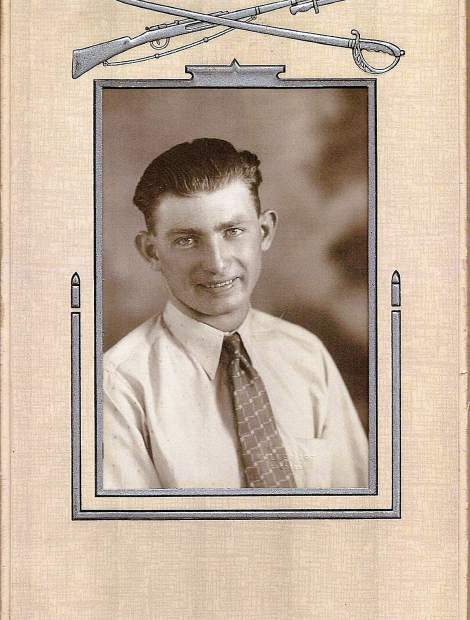
Of the 16 million Americans who served in the military in World War II, less than 2 percent fought in the remote, exotic, steamy, and disease ridden jungles of China, Burma, and India. Amazingly, Moffat County, itself small and remote, sent Donald Givens into this largely forgotten war zone.
After the Japanese rolled over the USA in the Philippines and wrested control of southeast Asia from colonial powers, they continued west and cut off the fabled Burma Road, the thin, winding, and dangerous supply road to China. By 1942, the British and Americans were forced to fly dangerous high altitude supply missions from India over “the hump” of the Himalayas. But in 1943, a mixed group of American, Brits, Indian, and Chinese forces started construction on a road from Ledo, India to connect with and reopen the original Burma road.
From articles and information provided by the Museum of NW Colorado, we can glimpse the deep roots Donald Givens had in Moffat County. Donald’s grandfather built the very first home in Craig in 1889 (location of J & R Cyclery). By 1920, his parents had moved to Riverside, Colorado, where Donald was born on Nov. 8. Disenchanted with school, he left Montrose High during his sophomore year and headed back north to the Maybell/Sunbeam area to work on the ranch of his aunt and uncle, Geraldine and Roy Templeton.
Single and young, Donald was drated by Uncle Sam in 1942. By September of 1943, as a member of the 504th Combat Engineer Light Pontoon Company, he was flown to Ledo. By early 1944, the multinational army (including the famed “Merrill’s Marauders”) under “Vinegar Joe” Stilwell moved south and converged on the key city of Myitkyina, lying along the Irrawaddy River. On May 17, Merrill’s Marauders slipped in from the jungles and captured the important airstrip
On May 19, 1944 a portion of the 504th, including Donald, was flown in from Ledo to support the raging battle. They were tasked with setting up a ferry system across the Irrawaddy just SW of the city. However, unit histories reveal the 504th did more than run a ferry system. On a nightly basis, as rafts laden with Japanese soldiers attempted to squeeze by, the 504th hunted and sank the rafts while killing scores of Japanese.
Finally, on Aug. 3, after a hot and desperate 78-day battle, Myitkyina surrendered to the CBI (China, Burma, India) troops. On Aug. 10, CBI Round-Up, a military newspaper for GI’s in Burma, described the once-thriving resort town for hunting and fishing as an “open-air morgue of unburied dead, puffed, pale and steaming in the blistering sun after an early morning heavy rain.” The living jungle feasted on the corpses and immediately began to sift men back into the earth. Many survivors suffered from typhus, amoebic dysentery, malaria or a combination of all three.
Donald and his fellow combat engineers quickly started to ferry Chinese troops across the Irrawaddy to finally connect the Ledo and Burma Roads. On Aug. 7, Donald’s ferry ran into trouble and started to sink. 300 yards from the nearest shore, all abandoned the ferry. According to a letter to Donald’s parents from the War Department in 1948, the current was four mph with a strong undertow. Donald never made it to shore. Members of his ferry searched for miles downstream but the Irrawaddy claimed Donald, and his body was never recovered. Three days later, his sunken raft was found five miles downstream.
Today, Donald is memorialized at the Manila American Cemetery in the Philippines on the “Tablets of the Missing.” His memory finally returned to Moffat County with his name inscribed on the World War II memorial located at Veteran’s Memorial Park.


Support Local Journalism
Support Local Journalism
Readers around Craig and Moffat County make the Craig Press’ work possible. Your financial contribution supports our efforts to deliver quality, locally relevant journalism.
Now more than ever, your support is critical to help us keep our community informed about the evolving coronavirus pandemic and the impact it is having locally. Every contribution, however large or small, will make a difference.
Each donation will be used exclusively for the development and creation of increased news coverage.