Group collecting signatures in effort to ban mountain lion hunts
Craig Press

Cats Aren’t Trophies/Courtesy photo
Statistics show the game management unit that straddles much of the border between Routt and Moffat counties north of Colorado Highway 40 recorded the highest number of mountain lions harvested by hunters.
Last season’s harvest in unit 4 during the late November throughout March season showed 21 lions killed, including 12 females and nine males, according to Colorado Parks & Wildlife.
Across Routt and Moffat counties, an average 60-65 mountain lions were harvested during the past three seasons. That number across the Yampa Valley represents about 12% of the 502 mountain lions harvested in Colorado last season.
“Moffat and Routt counties are very large landscapes in Colorado with high-quality lion habitat and very abundant prey species such as deer and elk, which probably contribute to the high percentage of statewide harvest,” according to CPW officials.
This means the Yampa Valley is as engrained as any part of Colorado in the ongoing debate about big cat hunting.
An advocacy committee called CATs, or Cats Aren’t Trophies, is backing ballot initiative 91 to ban trophy hunting of mountain lions as well as fur trapping of bobcats, explained Samantha Miller, a Grand Lake resident and CATs campaign manager.
“What we are seeking is a paradigm shift so that we are managing for healthy ecosystems,” Miller said. “To me, what’s really alarming is we are continuing to manage mountain lions to be hunted and not for ecosystem health. If we are looking at the big picture, which is health of ecosystems across the state, mountain lion trophy hunting is not needed to manage the population, and lions play an essential role in the ecosystem.”
However, officials and researchers at CPW, which has managed mountain lion numbers since 1965, say the population growth of humans in Colorado does not allow animals to be managed solely based on natural ecosystems. CPW game species are managed according to what some experts refer to as a “social carrying capacity.”
“We are tasked with managing (mountain lions) due to challenges brought on by the nearly six million people who now call Colorado home,” Mark Vieira, CPW carnivore and furbearer program manager, told CPW Commissioners during their January meeting.
Across Colorado during the 2022-23 season, 2,599 hunters killed 502 mountain lions, including 298 males and 204 females. For the nine previous seasons, hunters have killed 442-526 mountain lions each year.
Vieira told commissioners the mountain lion population in Colorado — roughly estimated between 3,800 and 4,400 adult lions — represents a conservation success story compared to pre-1965. He said big cats are managed similar to other big game species, and “mountain lions are not threatened or endangered in any way.”
However, big cat advocates, while supportive of ongoing CPW research studies on mountain lions and bobcats, want bigger changes now. The Colorado Sierra Club is also backing the ballot imitative.
“In these times of crashing biodiversity, the sport killing of mountain lions and trapping of bobcats is ecologically and ethically unsupportable and unsustainable,” said Redstone resident and field ecologist Delia Malone, wildlife chair for the Colorado Sierra Club.
One point that is debatable due to limited research studies is whether killing more mountain lions increases or decreases human conflicts, especially if a mountain lion mother is killed before kittens venture completely on their own at about two years old.
“For me, the lions involved in conflict are often younger lions that are either orphaned or younger males moving into new territory,” Miller said. “Hunters are not selecting in natural ways. I see conflict as connected to the hunting of lions not preventing it.”
Malone also argues that killing adult lions increases conflict.
“Trophy hunters often remove stable adult mountain lions from a population, which leads to increased conflict between mountain lions and humans and livestock,” she said.
CPW notes that the timing of the hunting season and state regulations are designed to protect mountain lion kittens and females with kittens. That is one reason that hunting with hounds is used in more than 90% of kills, Vieira said, because mountain lions treed or cornered by dogs can be viewed for age, size and gender before they are killed.
For advocates of the proposed ballot measure, the numbers of mountain lions and bobcats killed each year represent too much disruption to an apex predator species that helps to keep the natural ecosystem in balance. CATs started collecting the necessary 125,000 verified signatures from registered voters to put the measure on the November ballot.
Initiative 91 seeks a “prohibition on the hunting of mountain lions, lynx and bobcats, and, in connection therewith, prohibiting the intentional killing, wounding, pursuing, entrapping or discharging or releasing of a deadly weapon at a mountain lion, lynx or bobcat.”
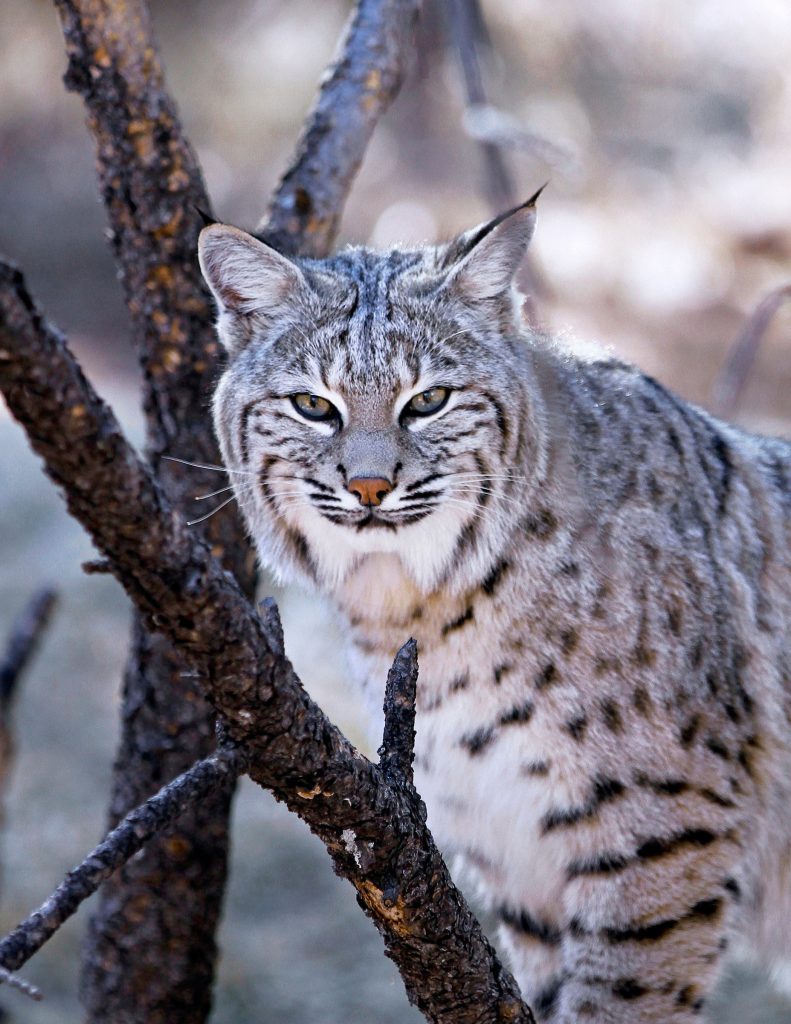
The initiative creates exceptions including for the protection of human life, property and livestock; establishing a violation of this prohibition as a class 1 misdemeanor; and increasing fines and limiting wildlife license privileges for persons convicted of this crime.
“The measure retains the ability to kill mountain lions that are involved in conflicts with people, livestock and pets in a way that doesn’t indiscriminately take cats off the landscape that are not causing problems,” Miller said.
Bobcat hunting season runs from Dec. 1 through the end of February, and CPW evaluations “suggest Colorado’s bobcat populations are stable and may be increasing in some areas.” Actual population figures for the elusive, adaptable small carnivores are difficult to obtain.
CPW Wildlife Research Scientist Shane Frank reported to commissioners on the agency’s current five-year study of bobcats. In fall 2022, researchers initiated a study of bobcat density, harvest effects, prey selection and development of monitoring techniques. For example, bobcats are captured to deploy GPS collars in game management unit 10 in Moffat County and unit 22 in Rio Blanco County.
The 2022-23 season showed 801 bobcats were killed statewide — the lowest number in CPW’s records since 2010 — including 383 from hunting, 355 from live trapping and 40 due to roadkill. Annual reported death rates for bobcats since 2010 included a high of 2,062 in 2017-18 when 708 bobcats were hunted and 1,269 were live trapped.
Currently there are no bag limits for bobcat trapping in Colorado.
“CPW is in the process of assessing potential introduction of bag limits for furbearer species where there are not currently limits in place,” CPW officials wrote in an email Friday.
Miller, who earned a master’s degree in public policy with an emphasis on environmental policy, believes mountain lion populations as a whole are self-regulating because of loss of habitat, territory and food supplies.
During the CPW Commission meeting earlier this month, staff recommendations were approved to drop the separate April hunt of mountain lions, which can be used in some game units as an additional management tool. That stop and start of hunting was too onerous to manage for staff, hunters and outfitters, Vieira said. In addition, the use of electronic calls to draw in mountain lions will be banned.
Another key discussion point in the big cat hunting debate is the percentage of female mountain lions of breeding age killed each year. At the commission meeting, members of the public submitting comments, several commissioners and Vieira all discussed working to add the number of females killed in each unit to the daily online reports. Mountain lion hunters are required to check the report posted at 5 p.m. each day to see if the game management unit has reached its quota.
“It’s really concerning when you have a high female harvest rate; it really impacts the population over time,” said Miller, noting recent statistics showing some elevated female kill ratios during the current hunting season.
Vieira said overall adult mountain lion females harvested have not reached annual quotas set by management studies. The current West Slope Management Plan recommends a maximum of 17% total human-caused mortality for mountain lions, and the actual annual rates have ranged from 14.2% to 16.4%, Vieira reported.
CPW said adult females should represent no more than 22% of mountain lions harvested each year to achieve a stable population level.
The Steamboat Pilot & Today reached out to more than a half a dozen hunting guides in the region, but all guides declined to be quoted or did not return messages.



Support Local Journalism
Support Local Journalism
Readers around Craig and Moffat County make the Craig Press’ work possible. Your financial contribution supports our efforts to deliver quality, locally relevant journalism.
Now more than ever, your support is critical to help us keep our community informed about the evolving coronavirus pandemic and the impact it is having locally. Every contribution, however large or small, will make a difference.
Each donation will be used exclusively for the development and creation of increased news coverage.