CPW seeks public comment on crawfish importation
Steamboat Pilot & Today
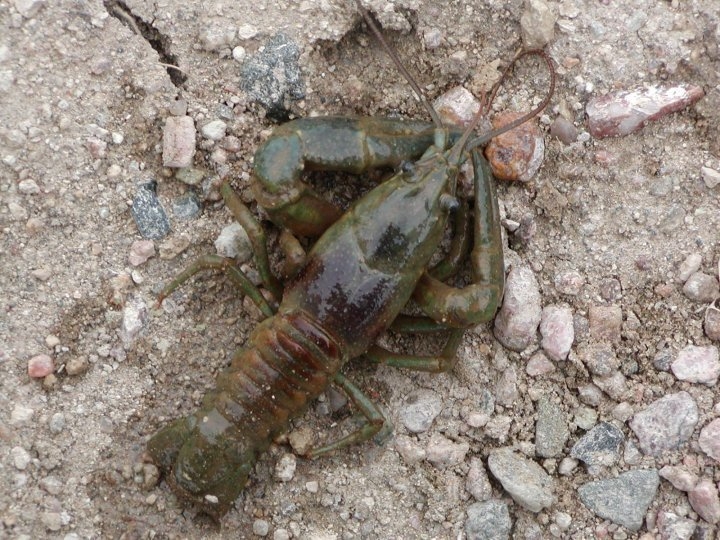
Colorado Parks and Wildlife/Courtesy Photo
Colorado Parks and Wildlife has recognized a large market for live crawfish imported to Colorado from outside of the state. The organization is seeking public input through July 30 on the potential importation of crawfish to the state.
CPW believes the red swamp crawfish is a major species already being brought into Colorado, but it is not currently allowed to be possessed within state lines.
“We received a tip from Louisiana that crawfish were being imported in Colorado, so we started an investigation and realized this was a much larger issue than just a single importer,” said Joey Livingston, CPW public information officer. “It really hasn’t come onto CPW’s radar until very recently.”
Regulations preventing the transport of most live crawfish into Colorado have existed for decades and are primarily used to protect the state’s natural aquatic ecosystems. As it stands, only virile, waternymph, calico, ringed and southern plains crawfish are allowed in the state, east of the Continental Divide.
CPW is in the process of reviewing crawfish regulations and will review public comment through the end of July to help determine a plan for the future. To provide your comment, go to http://www.engagecpw.org/crayfish-regulations.
Hundreds of commenters have flooded the active comment page with questions and varying opinions.
The slight majority of comments appear to be in favor of importing red swamp crawfish because they simply want to have the ability to eat them. Most do not seem to have any desire to use red swamp crawfish as bait for fishing and see no reason to release them into the waters.
One commenter said, “Yes, we want our LA crawfish! I promise not to release any, too good to let them go! Thank you!”
Others are wary of the potential dangers the foreign crawfish could cause and do not trust the general public’s ability to keep them out of the waters.
Another comment states, “Absolutely not. Let’s work on protecting native species and reintroducing those we’ve already decimated instead of introducing exotic species.”
According to Livingston, bringing in foreign species of any kind can make it much more difficult for native species to survive. Reports from other states have already declared red swamp crawfish as invasive and they have the ability to adapt to new homes.
“(Red swamp crawfish) have established and survived in Alaska, Minnesota, Wisconsin and Michigan,” Livingston said. “They definitely are able to survive winter temperatures by burrowing underground. The term our biologists use is they have a lot of ecological plasticity, so they are able to adapt to other climates.”
Livingston pointed to a different crawfish species, the rusty crawfish, as an example of what could happen if red swamp crawfish populated Colorado waters.
In 2009, the rusty crawfish, which is native to the Ohio River Basin, was detected for the first time in Colorado in the Yampa River and Catamount Reservoir. It was found again in 2010 in Sanchez State Wildlife Area and expanded again in Routt County to Stagecoach Reservoir State Park in 2011.
Rusty crawfish are still very prevalent in Colorado today and are believed to have been introduced by anglers using them as bait. They eat small fish, aquatic insects, eggs and aquatic vegetation that can damage fish habitats for spawning, cover and food.
“(Rusty crawfish) are larger and more aggressive than our native crawfish so it can outcompete and displace our native crawfish,” Livingston said.
Crawfish regulations are scheduled for discussion at the Fish Health Board Meeting on Monday where talks will revolve primarily around red swamp crawfish consumption.
Discussions will pick up again at the Parks and Wildlife Commission meeting Aug. 24-25, where a final decision could be made.
“We are a public agency so what the public wants is always a big part of what we do, but the wildlife takes priority for us and keeping wildlife of Colorado here in perpetuity,” Livingston said.
Colorado anglers fear drought will make it ‘hard to keep fish alive’ this summer
Colorado’s trout fisheries could face a difficult summer, impacting the state’s billion-dollar angling industry, as widespread drought conditions drive predictions that streamflows will be well below-average.

Support Local Journalism
Support Local Journalism
Readers around Craig and Moffat County make the Craig Press’ work possible. Your financial contribution supports our efforts to deliver quality, locally relevant journalism.
Now more than ever, your support is critical to help us keep our community informed about the evolving coronavirus pandemic and the impact it is having locally. Every contribution, however large or small, will make a difference.
Each donation will be used exclusively for the development and creation of increased news coverage.