Colorado highway crews to ramp up roadside fire mitigation, including on I-70 mountain corridor, as drought raises wildfire concerns
On I-70, U.S. Highway 6 and U.S. Highway 285, CDOT is coordinating vegetation management with partners to extend wildfire treatments past the right-of-way, where possible
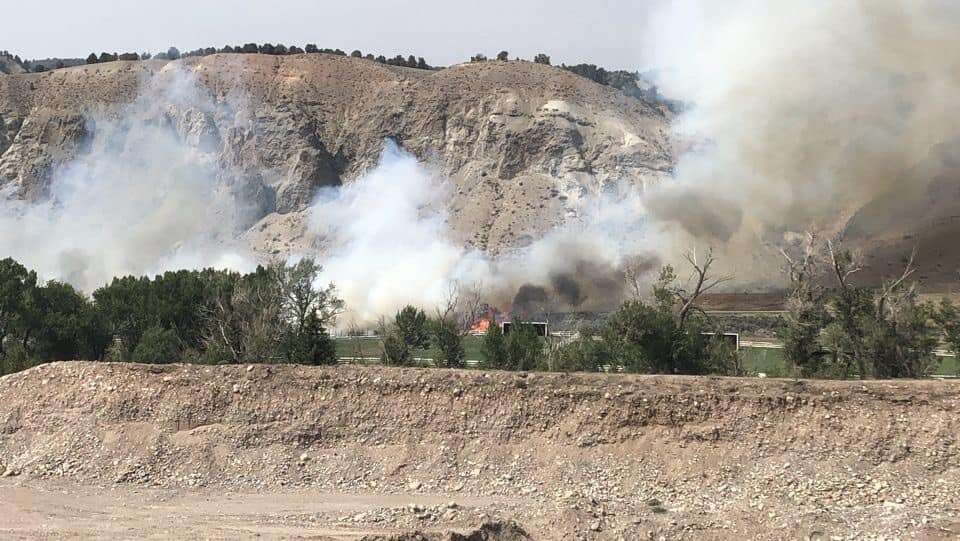
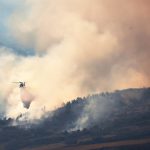
Photo courtesy Eagle River Fire Protection District
The Colorado Department of Transportation is ramping up the amount of roadside fire mitigation work it does as drought conditions raise wildfire concerns statewide, according to a news release.
Colorado has experienced a record-warm winter and one of the worst snowpacks in decades. The hot, dry conditions prompted Gov. Jared Polis to activate the state’s Drought Task Force earlier this week.
“Our highway corridors run through some of the most fire-prone landscapes in the country,” CDOT Deputy Director of Operations Bob Fifer said in a statement. “We have a responsibility not only to keep roads open, but to make sure our right of way isn’t contributing to the fire problem.”
To reduce wildfire risk, the transportation department is accelerating its roadside vegetation management program, expanding coordination with partners and putting contingency plans in place in case fire conditions deteriorate this summer, according to the new release.
Crews have already started mowing, clearing brush and treating vegetation along high-priority corridors, with a focus on areas identified as elevated fire threat zones by the Colorado Division of Fire Prevention and Control, the release states. These areas include El Paso and Teller counties to Larimer County, Jefferson County to Garfield County and Montezuma, La Plata, Archuleta, Dolores and San Miguel counties.
Dry, unmowed grass and dense brush along highway shoulders are among the most common ignition points for roadside wildfires that can be sparked from a trailer chain or a hot catalytic converter, according to the transportation department.
The transportation department also said it’s expanding the use of herbicide treatment and mechanical brush removal along road shoulders in areas where topography and traffic volumes increase the chances of ignition and wildfire spread. This can create breaks to slow or stop a fire from spreading to surrounding wildland, according to the news release.
On mountain corridors, including portions of Interstate 70, U.S. Highway 6 and U.S. Highway 285, vegetation management is being coordinated with local and federal land managers to ensure treatments extend beyond the right-of-way where possible, the release states.
CDOT said in the release that it is an active participant in the state’s emergency multiagency drought response and works closely with Colorado State Patrol, Colorado State Fire Chiefs, county emergency managers and local fire departments to share risk information and align protocols, according to the news release.
The transportation department has also coordinated with the Colorado Division of Homeland Security and Emergency Management to ensure highway closure and traffic management protocols are current for potential fire-related incidents, the release states.
With the heightened fire risk, transportation officials also called on drivers to be aware when driving through forested and grassland corridors, refraining from throwing cigarettes from vehicles and securing chains and tow equipment so they don’t spark on the road.
Travelers can check current road conditions, including closures and fire-related restrictions, at COTrip.org.



Support Local Journalism
Support Local Journalism
Readers around Craig and Moffat County make the Craig Press’ work possible. Your financial contribution supports our efforts to deliver quality, locally relevant journalism.
Now more than ever, your support is critical to help us keep our community informed about the evolving coronavirus pandemic and the impact it is having locally. Every contribution, however large or small, will make a difference.
Each donation will be used exclusively for the development and creation of increased news coverage.