‘Little Mermaid’ remake shows stronger voice, greater depth for beloved story

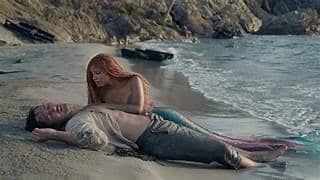
Walt Disney Studios/Courtesy Photo
If you’re thinking that yet another rehash of a legendary movie sounds like a waterlogged idea, “The Little Mermaid” may just give you the breath of fresh air you need.
As humans go about their business on land and at sea, the realm of Atlantica stretches farther than any of them know beneath the ocean waves. Ruled by King Triton (Javier Bardem), the merfolk prefer to stay clear of humankind and the dangers of the surface world.
Well, most of them.
The youngest of Triton’s seven daughters, Ariel (Halle Bailey), is increasingly fascinated by the people on the other side of the water, as well as the many odd relics she’s found from their travels.
Her curiosity only grows when she saves a young prince (Jonah Hauer-King) amid a shipwreck, which brings new longing to explore the world her culture has forbidden her from experiencing.
Ariel’s restlessness takes a new turn when she is introduced to her estranged aunt Ursula (Melissa McCarthy), who offers a deal that will magically transform her from a mermaid to a human but could also cost her dearly.
Stepping into the shoes, or rather glittery tail, of a Disney Princess isn’t an easy task, but Bailey is an ideal fit for Ariel, with effervescent charm and thoughtfulness to spare.
It helps that her character is written as less of a flighty ingenue and more of a bona fide heroine in this reimagining. Yes, she nails the all-important “Part of Your World,” but the use of her voice — established here as more significant and powerful than her animated origin — continues even after it’s been stripped from her as you get more of a sense of her thoughts via inner monologue once Ariel is struck silent.
You know, because a female protagonist who’s strategically unable to communicate for half the movie is kind of a bad look.
3.5 out of 4 stars
PG, 135 minutes
Starring: Halle Bailey, Jonah Hauer-King, Javier Bardem, and Melissa McCarthy
Ariel’s love interest, ably played by Hauer-King, also is more substantial here than he was in 1989. Sure, Prince Eric already had more personality than his predecessors from “Snow White,” “Cinderella” and “Sleeping Beauty”— sorry, just having a name doesn’t make you interesting, Prince Phillip — but here he’s portrayed as an adventurous and diplomatic royal attempting to revitalize a dying kingdom despite a disapproving parent, in his case an overprotective adoptive mother (Noma Dumezwini).
Wow, maybe these two crazy kids actually are a match!
As for the aquatic actors who only provide voiceover, Daveed Diggs provides the Caribbean crustacean candor you expect from Ariel’s reluctant chaperone, Sebastian, whose constant crabbiness is balanced out by Jacob Tremblay as cowardly but supportive best friend Flounder. Then there’s Ariel’s bird-brained source for surface world information, Scuttle, with Awkwafina providing all the New Yawk accent you need if you’re missing Buddy Hackett.
As the Disney villain who raised the bar for all of them to come, McCarthy offers all the snark and seductive tones that her animated likeness provided, as well as the inflated ego that everyone loves to hate about Ursula. What’s more, by acknowledging her as a blood relative of Ariel —hinted at but never solidified in the original cartoon — we see the potential dark side of a princess who went wrong thanks to oppression by an undersea monarch who only sees his mistakes well after it’s too late.
The luminescence of Ursula’s tentacles is one of the stronger points of the exhaustive visual effects, though there are plenty of less impressive designs to create convincing marine life.
The conundrum Disney already had to face in re-envisioning “The Lion King” is made easier by the fact that much of the ocean denizens don’t need to have an expressive face. You can just imagine the marketing meeting where execs compromised the change in Flounder — who looks like far less of a cuddly couch pillow ready to be made into a stuffed animal —by demanding that Sebastian have more adorable eyestalks.
The inevitable climactic moment of a big, bad CGI monster taking over the screen is less admirable and less effective than it was a few decades ago in its two-dimensional version, but thankfully director Rob Marshall and screenwriter David Magee don’t make the bigger action moments the most important ones.
The story’s first act is much the same as it was before, but the second is far more intriguing as Ariel builds a true kinship with the boy with whom she’s infatuated. The clumsy forced romance between the pair has always been one of the cringier aspects of the film that kicked off the Disney Renaissance, but with a longer runtime storytellers can keep the positives of fairy tale roots while also making the love feel real.
That same sense of honoring the past and building upon it is showcased by Lin-Manuel Miranda tinkering with the songs of Alan Menken and the late Howard Ashman, while also adding some fresh tunes. Eric deserves a solo song like “Wild Uncharted Waters” to profess his emotions, and giving Bailey another chance to show off her pipes with “For the First Time” is simply good musical direction.
You may not love the rap-infused “The Scuttlebutt,” but at least the right pair are spitting those verses.
What makes this arguably the most poignant entry in Disney’s live-action remakes is its social commentary with a depiction of two coexisting cultures vaguely aware of each other with both ruled by superstition, prejudice, and fear. What’s more, the idea that no one else gets to define who you are has never been more important.
If you grew up with Jodi Benson’s voice embedded in your brain, “The Little Mermaid” isn’t going to hit you exactly the same way as the one from your childhood.
And that’s OK.
Yet, the spirit of that cartoon about a plucky fish girl following her dreams shines through even greater in this rendering and proves that even when you’re reusing old stories, there are new elements to explore and new generations to inspire.

Support Local Journalism
Support Local Journalism
Readers around Craig and Moffat County make the Craig Press’ work possible. Your financial contribution supports our efforts to deliver quality, locally relevant journalism.
Now more than ever, your support is critical to help us keep our community informed about the evolving coronavirus pandemic and the impact it is having locally. Every contribution, however large or small, will make a difference.
Each donation will be used exclusively for the development and creation of increased news coverage.